
Steel Roof Cost: What Every Homeowner Should Know
RRoofpedia guidePublished November 11, 20261,400 words · 6 min read
Roof calculator
How many shingles will I need?
From the guide Estimates and Squares: How Many Shingles Will I Need? Roofers sell by the square: 100 square feet of roof.
- Roof area
- –
- Pitch factor
- –
- Bundles (3 a square)
- –
A starting number, not a quote. Ridge caps, starter strip and valleys add more. A roofer measures it for real.
Steel is the most widely chosen metal roofing material, valued for its strength and long service life. Cost depends on panel type, gauge, coating, and roof complexity. Written quotes from licensed installers are the only reliable way to know what your specific roof will run.
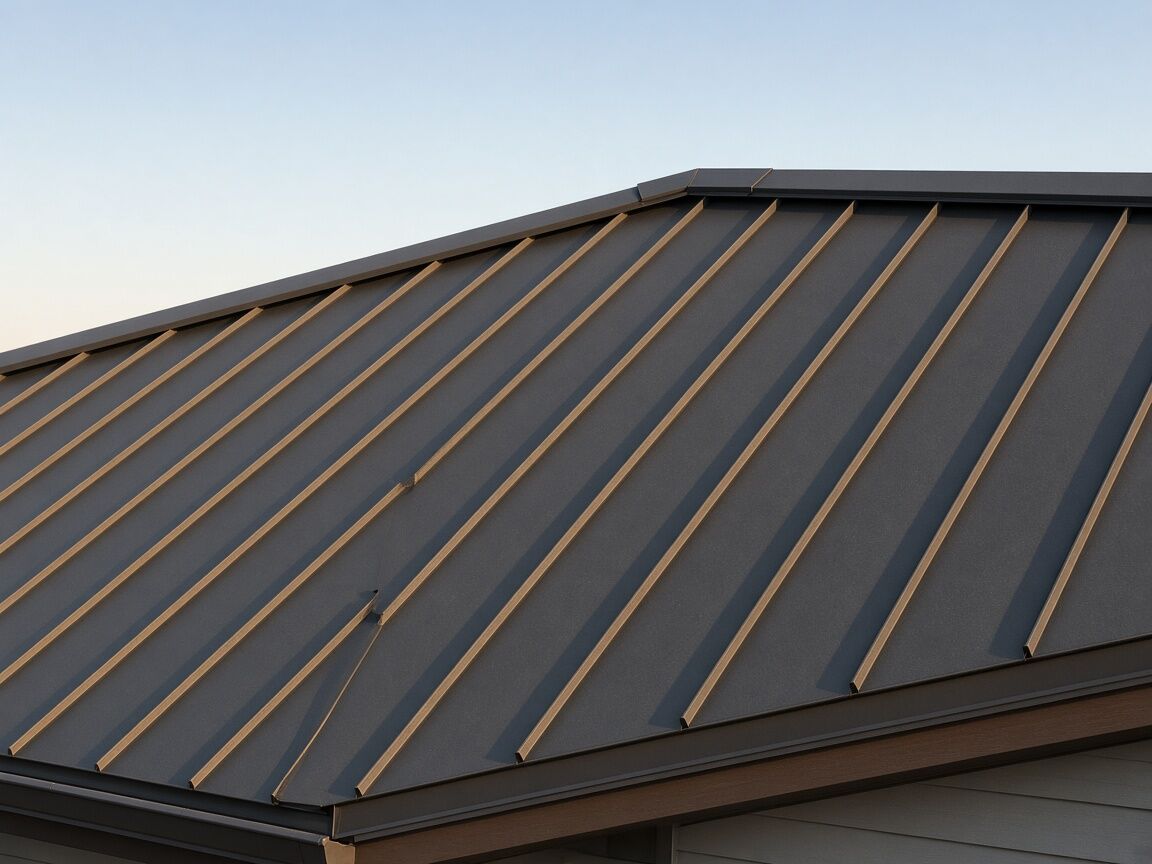
Picture made with AI for this guide.
What is a steel roof and how does it work?
A steel roof is a system of formed metal panels fastened to your roof deck or a purlin framework. The panels shed water by directing it along seams or corrugations down to the eaves. Because bare steel rusts, every panel sold for roofing carries a protective coating before it leaves the factory.
The two main coating types are galvanized, which is a zinc layer, and Galvalume, which is an aluminum-zinc alloy. New England Metal Roof states Galvalume delivers superior corrosion resistance, particularly in coastal or industrial environments where salt and airborne chemicals accelerate rust. A factory-applied paint system goes on top of either coating to extend service life further and add color.
Steel also handles fire well. When installed as a tested assembly, it commonly earns a Class A fire rating, the highest classification available.
The main steel panel types and how they differ
Three profiles dominate residential and light-commercial steel roofing: standing seam, corrugated, and R-panel or ribbed designs.
Standing-seam panels run vertically from ridge to eave. Their raised, interlocking seams hide the fasteners completely. That concealed-fastener design eliminates exposed screw holes, which is the main path water takes into a lapped system over time. Building codes generally allow standing-seam systems on slopes as low as one-quarter inch of rise per twelve inches of run.
Exposed-fastener panels — corrugated sheets and R-panels among them — attach with screws driven through the metal face. The washers under those screws compress to seal the hole, but they degrade with UV exposure and thermal cycling, so they need more frequent inspection. Codes typically require at least a 3:12 slope for exposed-fastener lapped panels without sealant.
Corrugated steel has the longest residential track record of the three. R-panel is common on agricultural and light-commercial buildings and is generally the most straightforward to install.
What makes steel roof cost go up or down?
Panel gauge is the starting point. Gauge describes steel thickness: the lower the gauge number, the thicker the metal. Thicker panels cost more material but resist denting from hail and foot traffic better than thin ones.
Coating choice matters too. Galvalume panels carry a premium over standard galvanized, and a high-performance paint system adds to that. In a coastal zip code, skimping on coating is a false economy because corrosion repair costs more than the upgrade would have.
Roof geometry drives labor cost hard. A simple gable with one or two penetrations takes far less time than a hip roof with dormers, valleys, skylights, and a chimney. Each penetration needs custom flashing. Steep pitch adds time and safety equipment. Limited access — a narrow lot, a multi-story home — does the same. Regional labor rates vary significantly, so written, itemized quotes from at least three licensed contractors are the only reliable way to know the real number for your house.
How a steel roof goes together
Installation starts with the deck. Depending on the panel system and local code, that means either a solid plywood or OSB deck or a purlin framework. Underlayment goes on next, selected for compatibility with the panel system and local climate. Ventilation and insulation get worked out at this stage too, because correcting them after panels are down is expensive.
Flashing is cut and set at every transition: eaves, rakes, ridges, valleys, walls, and penetrations. Panel layout is planned before the first sheet goes up so seams land correctly and laps run in the right direction relative to prevailing weather. Fasteners go in according to the manufacturer's pattern — deviating from it can void the warranty and compromise wind uplift performance.
Steel expands and contracts with temperature swings. A properly designed standing-seam system uses clips that let panels float. Exposed-fastener systems rely on slotted holes or specific torque limits to allow the same movement. Ignoring thermal movement leads to buckled panels or fasteners that back out over time.
How to choose the right steel roof for your house
Confirm your roof's slope before talking to any contractor — a pitch calculator removes the guesswork. Slopes below 3:12 typically rule out exposed-fastener panels without special engineering, leaving standing seam as the practical steel option.
Next, think about your environment. Coastal or high-humidity climates call for Galvalume over galvanized. Areas with frequent large hail push toward heavier gauge panels. High-snow regions need a system rated for the load and, in some cases, snow guards to control sliding sheets.
Appearance matters to most homeowners. Standing seam reads as clean and contemporary. Corrugated reads as traditional or industrial depending on color and context. R-panel tends to disappear on agricultural-style homes but can look utilitarian on a conventional house. Match the system to your budget and how long you plan to stay — a heavier-gauge standing-seam roof with Galvalume and a premium paint finish costs more upfront but demands less maintenance attention over time.
Steel roof care and maintenance
Walk the perimeter after every significant storm. Look for dented panels, displaced flashings, debris caught in valleys, and any fastener heads that appear to have backed out. Binoculars handle most of this from the ground safely. Do not step onto a steel roof unless you are trained and equipped — call a pro.
Keep gutters and valleys clear. Debris holds moisture against the coating and accelerates corrosion at panel edges. Check that downspouts flow freely so water cannot back up under eave flashings.
Inspect the paint and coating once a year. Small scratches that expose bare metal should be touched up with a compatible product before rust takes hold. Cut edges and drilled holes are the most vulnerable spots on any steel panel. For exposed-fastener systems, have a roofer check washer condition on a set schedule — a washer that has flattened or cracked is an open leak path.
When to call a professional roofer
Call a pro before work starts, not after something goes wrong. Steel roofing installation requires precise fastening patterns, correct underlayment, and flashing details specific to each panel system. The NRCA's 2026 metal flashing manual updated guidance on exactly these details, reflecting how much precision the work demands. Manufacturer warranties typically require professional installation.
Call a pro if you notice lifted or missing panels after a storm, water stains on ceilings below the roof, rust streaks running down exterior walls from the roof edge, or any fastener pulling through a panel. These are not watch-and-wait situations.
Call a pro for any inspection that requires stepping onto the roof surface. Steel panels are slippery when wet or frost-covered, and the pitch that sheds water efficiently is the same pitch that makes a fall dangerous.
Questions people ask
Is a steel roof worth it compared to asphalt shingles?
Steel costs more upfront than asphalt shingles. The tradeoff is a longer service life, lower maintenance frequency, and Class A fire resistance when installed as a tested assembly. Whether that tradeoff makes sense depends on your budget, your climate, and how long you plan to own the home.
What is the minimum slope for a steel roof?
Standing-seam systems can go as low as 1/4:12 under most building codes. Exposed-fastener lapped panels typically require at least 3:12 without sealant. Check your local code and the manufacturer's spec sheet — both govern.
Does a steel roof dent from hail?
Severe hail can dent steel panels, especially lighter gauges. Heavier gauge panels resist denting better. This Old House notes denting as a known drawback of steel roofing. Ask your contractor which gauge suits your hail-risk zone.
What is the difference between galvanized and Galvalume steel roofing?
Galvanized steel is coated with zinc. Galvalume uses an aluminum-zinc alloy. New England Metal Roof states Galvalume provides superior corrosion resistance, especially in coastal or industrial environments. Galvalume typically costs a bit more than standard galvanized.
What should a steel roof quote include?
Ask for panel gauge, coating type, underlayment spec, flashing details, fastening pattern, warranty terms, and whether removal of the existing roof is included. Itemized quotes let you compare contractors on equal terms.
Read: Metal Roofs: Types, Cost and Metal vs Shingles
Read: Corrugated Metal Roofing: What Every Homeowner Should Know
Roofers near you
Papalocal lists 57,666 roofers. Search them by town.
Related guides
All roofing guides
Your business? Claim it free