
How Much Does A New Roof Cost?
RRoofpedia guide2,453 words · 11 min read
Roof calculator
How many shingles will I need?
From the guide Estimates and Squares: How Many Shingles Will I Need? Roofers sell by the square: 100 square feet of roof.
- Roof area
- –
- Pitch factor
- –
- Bundles (3 a square)
- –
A starting number, not a quote. Ridge caps, starter strip and valleys add more. A roofer measures it for real.
A new roof costs what its size in squares, material, pitch, layers to tear off, decking repairs and local labor rates add up to, so two houses of the same size can get very different prices. The dollar figures in this guide date from when it was written; for today's price, get several written quotes that list the same items.
Help! How Much Does it Cost to Replace a Roof?
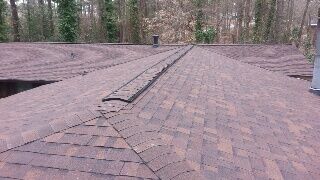
Looking for a new roof to be installed? A new shingle roof is a big investment, so you’re probably looking to see exactly just how much a new roof on your home is going to cost you. We’ll do our best in this article to break down the roofing prices. This way, you’ll have a ball-park range of what your roofing contractor will price your new roof to be.
You will find the accumulation of the total price of a roof replacement in this color and font. Remember that the prices are estimates and the price of your roof replacement will vary.
How Big is My Roof?
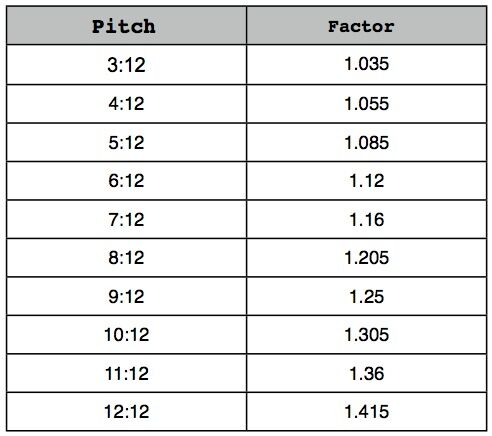
Alright, let’s start with the basics. First, you have to determine the size of your roof. Roofs are measured in squares. A square in roofing terms is equal to 100 square feet. The average home is approximately 30 squares, meaning that their roof is 3,000 square feet. Here is a simple way to figure out the measurement of your roof.
First, you need to find the square footage of the base of your home. Use a tape measurer to find the length and width of your home. If it’s irregularly shaped, divide the home into geometrical shapes, find the area of each, then add them together. Once you know the square footage of the base of your home, find the pitch. You’ll see directions to finding the pitch of your home in the section below.
Now, you’ll need the pitch and square footage to find the size of your roof. Look on the chart below for the correct multiplier that matches your slope. You’ll see that a pitch of 6/12 has a multiplier of 1.12. To find your roof size, multiply the square footage by the proper multiplier. The total is the total square footage of your roof!
What is My Roof Pitch?
You need to determine the pitch of your roof. Generally, steep roofs cost more to replace. The angle of a rof is calculated by a ratio. A common roof pitch is a 6-12 pitch. This means that the roof rises 6 inches for every 12 inches it runs horizontally. Any roof with a slope of 8/12 or higher is considered very steep.
How to Measure the Pitch of My Roof:
Go into your attic. Place the end of a level against the bottom of a roof rafter. Hold it perfectly horizontally level. Now, measure from the 12 inch mark vertically straight up to the underside of the rafter. That number is the length that the roof rises in 12 inches that it runs horizontally.
How Many Shingles Will My Roof Need?
Some roofers over or under estimate the amount of bundles a roof will need in a replacement. This is because an average 30 square home needs more than 30 squares of shingles. You have to consider the waste. Waste generally takes 10% of the material. That equals approximately 4 squares. An average home has 150 feet of ridge, and 240 feet of starter, so that makes up another 3 squares. After all the extra shingles are accounted for, a 30 square roof generally requires 40 squares of shingles. If you’re worried about wasting the edge shingles, see how they can be recycled here
Ridge and starter shingles are very important. 3 Tab shingles are not made by manufacturers with the intention of being used as ridge shingles on an artchitectrual roof that is rated at 110-130 mph. Roofs with that sort of rating need enhanced “ridge shingles” that have the same life cycle (or longer) than the field shingles.
We’ve heard professionals explain this concept with a comparison to car tires. Using cut up 3 tabs as ridge shingles with an architectural roof is like buying three 100,000 mile tires for your car and one 50,000 mile tire. One tire will wear out faster than the rest. Similarly, the ridges will fail faster if they are not of equal or higher quality. The moral of this story is that you need to be sure your roofing contractor is using the correct starter and ridge shingles for your home.
Today, one square of 30 year architectural shingles costs about $78 (without tax). One square of 3 tab shingles costs about $65. If you do the math, the shingles for an architectural roof replacement will cost $3,120. The shingles for a 3 tab roof will cost about $2,600. If you’re wondering which type of shingle you should choose, check out this comparison between architectural and 3 tab shingles.
How Much Underlayment and Other Materials Will My Roof Need?
Roofs not only have shingles, but also felt underneath the shingles and ice and watershield in the valleys. You can get 15 lb felt or 30 lb felt. Both types are generally $20 per roll. 15 lb felt covers 4 squares per roll, and 30 lb felt only covers 2 squares, so you’ll need double the amount of rolls if you use 30 lb felt.
We have some advice from a professional roofer on selecting the proper underlayment (UL). When it comes to asphalt saturated felt paper, there is only one true 30 lb UL. It is made by Tamko and it is called Tamko Underlayment 30 lb felt. It typically needs to be specially ordered. Regular 30 lb felt is a UL 15 or 16, just as regular 15 lb felt is typically a UL 8. GAF Shingle Mate lays nice and flat and is one more Branded Component needed to meet warranty requirements.
If you have a 30 square roof and go with 15 lb felt, it will cost about $160. If you use 30 lb felt, it will cost approximately $320.
Ice and watershield underlayment is installed in the valleys of a roof for extra protection. An average roof needs about 2 rolls of ice and watershield. Each roll costs about $50, so total cost of ice and watershield is $100.
Most homeowners are having new ridge vent installed on their home now. The average home needs 60 feet of ridge vent. Ridge vent comes in 4 foot sections for $10 per section. After doing the math, ridge vent on a home costs $150.
How Much Does it Cost to Tear Off a Roof?
The next thing you need to consider when totaling the cost of a roof replacement is the cost of tearing off your original roof. This depends on the company you hire, the size of your roof, and the intensity of the tear off. The price for tearing off the existing material on an average home is $1,000.
Cost of Labor for a Roof Replacement.
Finally, the last part of the price the price of labor. Roofing is strenuous labor, so it’s not cheap. However, if you can find a good local company without a lot of overhead, they’re more likely to give you a good deal. The average company charges $50 per square for installation. This price varies between companies, so you need to ask the companies that you’re considering for doing your roof. A good rule of thumb is that bigger companies are going to charge more because they have more overhead. smaller, local companies can afford to give you a cheaper price on your home. With this in mind, the average 30 square home will cost approximately $1,500 in labor.
Total Cost of A Roof Replacement
So far, if you’ve done the math, an average roof replacement will cost about $6,190. This is not taking into account the price of the workers traveling to your home, dumpster fees, taxes, and additional materials. After adding in all those additional costs, the average price for a roof replacement can be anywhere between $8,000 to $14,000 on the average sized home. You’ll find that a company without a lot of overhead will charge you within the $8,000-10,000 range, while a company with a lot of overhead will charge anywhere from $10,000-14,000. For help with choosing a roofer, check this out!
Resources
- We would like to thank Bill Hubbell with Anchor Roofing Inc. for providing excellent insights.
- Duane Clarke with E.M. Blue Inc. also gave valuable information.
Roof replacement cost: what moves the price today
Since this guide was written, shingles, underlayment, disposal and labor have all gone up, so treat its figures as a picture of how a roofing bill is built rather than as today's prices. The parts are the same; the numbers have moved.
Size comes first, measured in squares, and complexity comes next. A plain gable roof with two big slopes is the cheapest shape per square. Every hip, valley, dormer, skylight and chimney adds cutting, flashing and time. A steep pitch adds cost because crews need harnesses, roof jacks and more time per square, and a second or third story adds staging and hauling.
Then come the unknowns under the old roof. Each extra layer of old shingles adds tear-off and disposal. Rotten decking is priced by the sheet, and nobody knows how many sheets until the old roof is off, so look for that per-sheet price in the contract. Local code can add items, such as ice barrier at the eaves or new drip edge. Finally, labor rates, permit fees and how busy roofers are after a storm season differ a lot from one town to the next.
Cost to replace a roof on a 2,000 sq ft house
The square footage on a house listing is living space, not roof. To turn one into the other, start with the footprint. A one-story ranch with 2,000 square feet of living space has a footprint of about that size, plus the garage and porches if they share the roof. A two-story house with the same living space has a footprint closer to half that, so its roof can be much smaller.
Next add the overhangs, which run past the walls on every side, and then apply the pitch. A steeper roof has more surface than a shallow one over the same footprint, and the pitch multiplier this guide explains does that math. A 2,000 square foot ranch with an attached garage and a moderate pitch can easily need well over 20 squares of shingles once waste is counted, while a two-story house of the same size may need far fewer.
That is why an online price for a 2,000 square foot house can be off in either direction. Measure the footprint, find the pitch, and get quotes that state the number of squares; if two roofers' counts differ widely, ask each how they measured.
Metal roof cost compared with shingles
Metal roofs cost more than asphalt shingles to install, and how much more depends on the kind of metal roof. Exposed-fastener panels, the ribbed sheets screwed through the face, are the least costly metal option and common on barns and some houses. Standing seam, with hidden clips and raised seams, costs considerably more because the panels are often formed on site and the trim work is exacting. Stamped metal shingles fall somewhere in between, depending on the product.
The price also moves with the metal itself. Steel is the usual choice, aluminum costs more and suits salty coastal air, and copper and zinc are in another bracket entirely. Thicker gauge, premium paint finishes and a roof full of valleys and penetrations all push the number up. So does finding a crew; metal is a specialty, and fewer roofers bid on it.
When you compare metal quotes, check that each one names the panel type, the metal and its gauge, the finish, the underlayment, and whether the old shingles come off. A low price sometimes means panels laid over the old roof or a thinner gauge.
Roof repair cost and roof inspection cost
Small repairs follow their own pricing. Most roofers have a minimum charge to show up, set ladders and get on the roof, so a single missing shingle can cost nearly as much as several. After that, the price depends on what failed and how hard it is to reach. Replacing a cracked pipe boot is quick. Re-flashing a chimney or a wall, or opening up a valley, takes far longer, and any wet decking found underneath adds to the bill. Steep or tall roofs and shingles that can't be matched raise the price too.
What an inspection costs depends mostly on what it is for. A roofer's look before quoting work is usually free. When you buy a house, the roof is checked as part of the general home inspection, so it is folded into that fee. After a storm, your insurer's adjuster inspects at no charge to you, though many owners also pay for their own opinion first.
The paid kinds climb with the paperwork. A roof certification, a signed statement of the roof's condition and expected remaining life that some insurers and lenders ask for, costs more than a walk-around because the roofer is putting a promise in writing. An independent consultant or engineer hired for a warranty or insurance dispute sits at the top, since the report has to stand up to the other side. Size, steepness and whether drones or test cuts are needed move every one of these prices.
Questions people ask
What does roof replacement cost per square include?
A per-square price usually covers the shingles, underlayment, starter, ridge caps, nails and the labor to install one square of roof. Tear-off, extra layers, decking, flashing, vents, permits and disposal may be inside it or listed separately, so ask what the number includes.
What affects flat roof replacement cost?
Flat and low-slope roofs use a membrane such as TPO, EPDM or modified bitumen instead of shingles. The price moves with the membrane chosen, the insulation board under it, the number of drains, curbs and pipes, and how much wet insulation has to be cut out and replaced.
Does a new roof cost more at certain times of year?
Demand matters more than the calendar. Prices and wait times rise after big storms, when every roofer is busy with insurance work. In slower months some roofers have more openings, though cold or wet seasons limit work in many areas.
Does roof pitch affect the price of a new roof?
Yes. A steeper roof has more surface over the same footprint, so it needs more material, and past a moderate pitch crews need harnesses and roof jacks and work more slowly. Very low slopes can also cost more if they need extra underlayment or a different roofing product.
This guide was updated in October 2026 with new sections and the questions people ask most.
Roofers near you
Papalocal lists 57,606 roofers. Search them by town.
Related guides
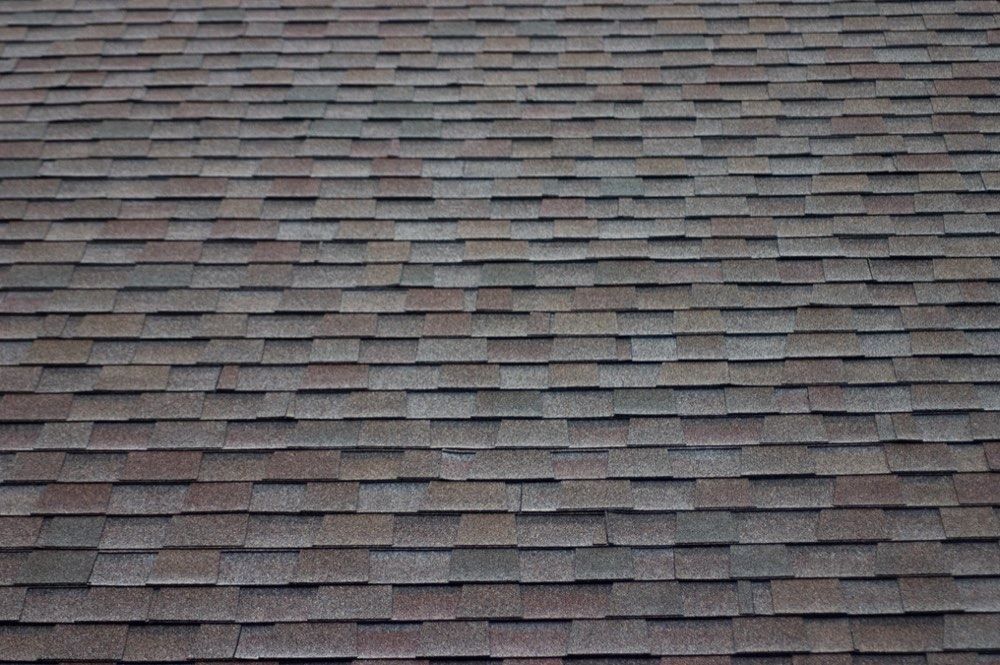 New: Roofing Calculator
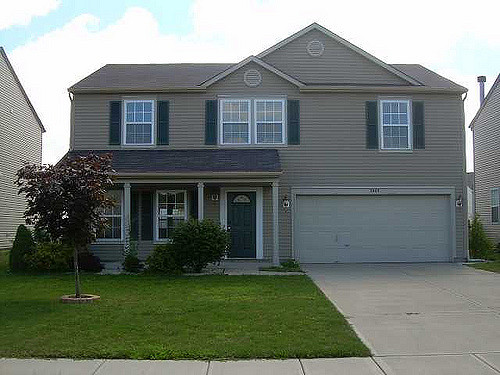 New: Roof Pitch Calculator
 Estimates and Squares: How Many Shingles Will I Need?
 Solar Roof Shingles
 Types of Roofing Shingles
Your business? Claim it free