
Corrugated Metal Roofing: What Every Homeowner Should Know
RRoofpedia guidePublished November 8, 20261,466 words · 6 min read
Free tool
Try a new roof on your housePick shingle colors on a house in the house designer, with siding, trim and gutters to match.Corrugated metal roofing uses alternating ridges and valleys pressed into steel or aluminum panels to add stiffness and channel rainwater toward the eaves. Panels attach with exposed screws driven through the peaks. Understanding the profiles, gauges, and maintenance basics helps you choose wisely and avoid common problems.
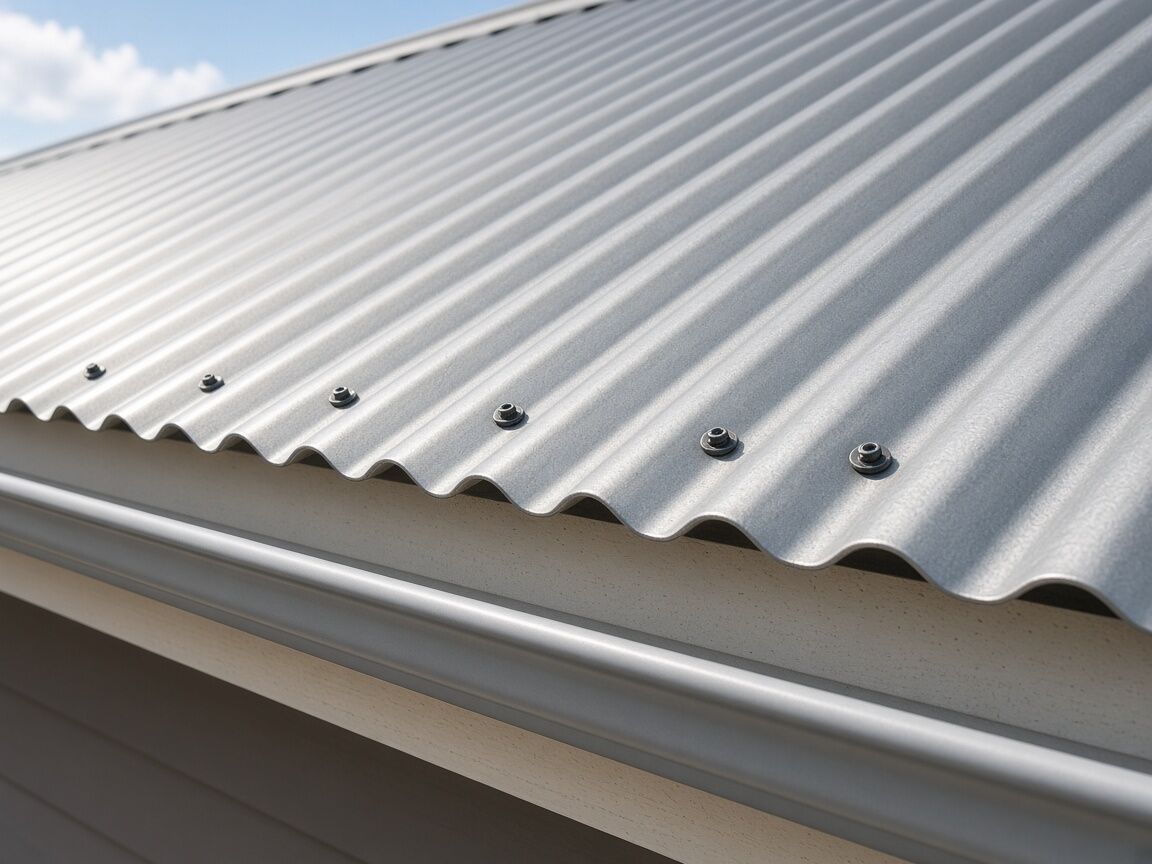
Picture made with AI for this guide.
What corrugated metal roofing actually is
A corrugated panel starts as a flat sheet of metal. A forming machine presses it into a repeating wave pattern — ridges and valleys running the length of the panel. That shape is the whole trick. The corrugation increases stiffness so thinner metal can span longer distances without sagging, and the valleys carry rainwater straight toward the eaves.
The word corrugated gets used loosely in conversation to cover several metal-roof profiles, including ribbed and wavy designs. Technically, true corrugated panels have a symmetrical wave. What they all share is the exposed-fastener attachment method: screws penetrate the panel itself to reach the substrate below. That is different from standing-seam metal roofing, where fasteners hide under interlocking seams.
Metal roofing on a listed assembly carries a Class A fire rating because metal is non-combustible. That matters when you are comparing options and talking to your insurer.
Steel, aluminum, and coating options compared
Most corrugated panels are steel, sold in 29, 26, and 24 gauge. Thicker gauge means a lower number — 24 gauge is heavier and more dent-resistant than 29 gauge. The coating matters as much as the base metal. Galvalume is an aluminum-zinc alloy coating; New England Metal Roof describes it as offering superior corrosion resistance compared to traditional galvanized steel in many climates.
Aluminum panels weigh less than steel and resist corrosion well in coastal salt air, where galvanized steel can rust faster. The trade-off is that aluminum dents more easily and costs more per panel.
Stone-coated steel is a newer direction. IKO launched a stone-coated steel tile line with Class A fire and Class 4 impact-resistance ratings, manufactured at a Texas facility that opened in 2025. Class 4 impact resistance is the highest rating under the UL 2218 hail test, which can matter for insurance in hail-prone states. Choose the metal and coating based on your climate, not just the price of the panel.
Profile depth and what it means for your roof
Corrugated panels come in different profile heights — the distance from the flat base to the top of a ridge. A 7/8-inch profile provides enough structural strength to span up to 5 feet between purlins. A 1/2-inch profile needs purlins spaced 3 to 4 feet apart because the shallower wave is less rigid.
That spacing difference changes your framing cost and your labor time. If you are re-roofing over existing framing, check what spacing you already have before ordering panels. Ordering the wrong profile for your purlin layout creates a sagging panel problem that is expensive to fix after the fact.
Thermal expansion is the other structural consideration. Metal moves with temperature swings. The installation design has to allow for that movement, or fastener holes elongate over time and leaks follow.
Minimum slope and installation basics
The IRC sets a minimum slope of 3:12 for lapped, nonsoldered corrugated seams installed without lap sealant. Below that pitch, water moves too slowly and can back up under the overlapping edges. If your roof is shallower than 3:12, a different panel system or added sealant at laps is required — confirm with your local code office.
Installation follows a set sequence: substrate preparation, underlayment, flashing at all penetrations and edges, then panel fastening. Screws go through the peaks of the corrugations, not the valleys. Driving a screw into a valley is one of the most common installation errors; water pools there, the washer cannot seal flat against the curve, and rust starts at that point.
Panels run in overlapping courses from eave to ridge, with each upper course lapping over the one below so gravity keeps water moving down and out. Long panel lengths reduce the number of horizontal laps, which reduces leak risk.
How to choose the right panel for your project
Start with your roof's pitch. Use a pitch calculator to confirm the slope before you talk to a supplier. Then consider your climate: coastal or high-humidity regions favor aluminum or Galvalume-coated steel. Inland dry climates are more forgiving of standard galvanized steel.
Gauge choice depends on what the roof will face. A farm outbuilding in a mild climate can use 29 gauge. A home in a region with heavy snow loads or frequent hail benefits from 26 or 24 gauge. Heavier gauge also holds fasteners better over time as the panel expands and contracts seasonally.
Profile depth ties back to your framing. If you are building new, you can design the purlin spacing around the panel you want. If you are re-roofing, measure your existing spacing first and match the panel profile to it. Get written quotes from at least two contractors that specify the gauge, coating, profile, and fastener type — those details determine what you are actually buying.
Maintenance: what to check and when
Corrugated metal is low-maintenance, not no-maintenance. Inspect twice a year and after any significant storm. Walk the perimeter from the ground with binoculars if you can. Look for displaced panels, lifted edges, and any rust-colored streaks running down from fastener locations.
Annually, check every visible fastener for looseness or rust. The neoprene washers under the screw heads compress over time and can crack, letting water in. A loose screw backed out even slightly breaks the seal. Clean the panels with mild soap and water to remove debris that holds moisture against the coating. Keep valleys and gutters clear — debris dams slow drainage and push water under laps.
If you spot rust at panel edges, that coating has been compromised. A touch-up with a compatible metal paint can slow the spread, but widespread rust means the panel needs replacing. Moss and algae can take hold in shaded areas; removing organic debris promptly keeps them from getting a foothold.
When to call a roofing professional
Walking on a corrugated metal roof is risky. If you must access the surface, step only on the ridges directly above rafters or purlins — the valleys have no support beneath them and can buckle under body weight. Any work above single-story height or on a steep pitch belongs with a trained roofer.
Call a pro when you find multiple loose or missing fasteners, any panel that has shifted out of alignment, rust that covers more than a small patch, or a leak you cannot trace from inside the attic. Flashing failures around chimneys, vents, and skylights are another job for someone with the right tools and sealants.
Solar integration is now a possibility worth discussing with a metal roofing contractor. Products like SunSteel arrive with solar panels pre-applied to the metal roofing panel, allowing a single trade to install both at once, according to Metal Roofing Magazine in September 2026. That changes the conversation about whether a new corrugated roof and a solar system can be planned together from the start.
Questions people ask
What is the minimum roof pitch for corrugated metal roofing?
The IRC requires a minimum 3:12 slope for lapped corrugated seams without lap sealant. Shallower roofs need sealant at every lap or a different panel system. Check with your local building department before ordering materials.
Is corrugated metal roofing the same as standing seam?
No. Corrugated panels use exposed fasteners — screws driven through the panel face. Standing-seam panels lock together at raised seams and hide the fasteners. Exposed fasteners cost less upfront but need periodic washer inspection to stay watertight.
What gauge corrugated metal roofing should I choose?
Most panels come in 29, 26, and 24 gauge. Lower numbers are thicker. A home roof in a hail or snow region benefits from 26 or 24 gauge. Outbuildings in mild climates often use 29 gauge. Your contractor can match gauge to your local load requirements.
How often should corrugated metal roofing be inspected?
Inspect twice a year and after any major storm. Look for loose fasteners, rust at edges, lifted panels, and cracked washer seals. Catching a single failed fastener early costs far less than tracing a slow leak through the decking.
Does corrugated metal roofing work in coastal areas?
Aluminum panels or Galvalume-coated steel hold up better than standard galvanized steel near salt water. Galvanized steel can corrode faster in coastal salt air. Specify the coating when getting quotes if you are within a few miles of the ocean.
Can I walk on a corrugated metal roof to inspect it?
Only on the ridges directly above rafters or purlins — never in the valleys, which have no support beneath them. For anything above ground level or on a steep pitch, have a trained roofer do the inspection.
Roofers near you
Papalocal lists 57,659 roofers. Search them by town.
Related guides
 Metal Roofs: Types, Cost and Metal vs Shingles
 Asphalt Shingle Roof: What Every Homeowner Should Know
 Chimney Leaks and Chimney Flashing
Your business? Claim it free