
Metal Roofs: Types, Cost and Metal vs Shingles
RRoofpedia guidePublished November 1, 20261,406 words · 6 min read
Free tool
Try a new roof on your housePick shingle colors on a house in the house designer, with siding, trim and gutters to match.A metal roof is steel, aluminum or another metal formed into panels or shingles and fastened over the roof deck. Most houses choose between standing seam, exposed fastener panels and stone-coated steel, which differ in looks, upkeep, noise and price; all three cost more than asphalt shingles to install and usually outlast them by a wide margin.
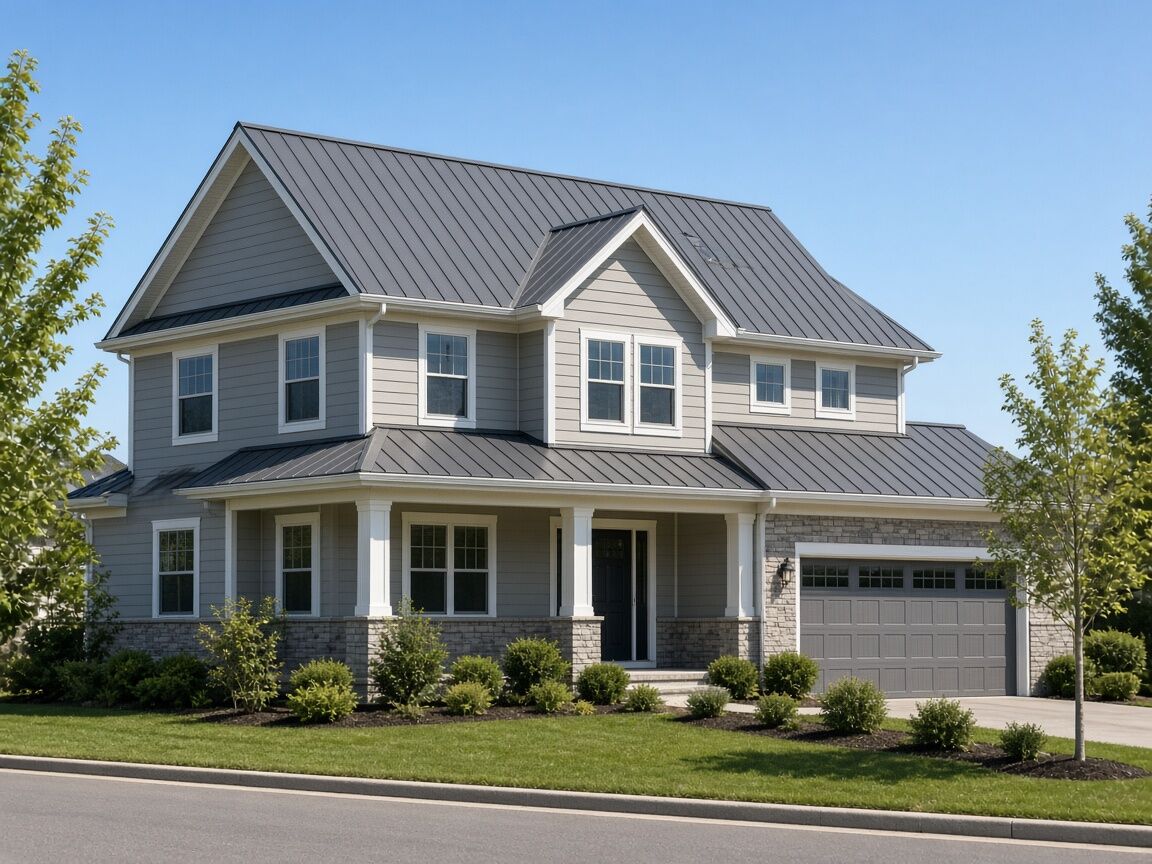
Picture made with AI for this guide.
Types of metal roofs: standing seam
Standing seam panels run in one piece from the eave to the ridge, and their edges rise into seams that lock onto the next panel. The fasteners sit underneath, on clips hidden inside those seams, so no screw goes through the face of the roof where water runs. The clips also let each panel slide a little as the metal grows in the sun and shrinks at night, which keeps the fasteners from working loose.
There are two main kinds. Snap-lock panels press together by hand and suit most homes on ordinary pitches. Mechanically seamed panels are folded shut with a seaming tool after they are laid, which holds better in high wind and lets the roof go down to much lower slopes than shingles can.
Many installers form the panels on site from coils of painted metal, cut to the exact length of each slope. The look is clean and linear, and the trim at valleys, hips, eaves and walls is where skill shows. Wide, flat panels can show a slight waviness called oil canning; it is cosmetic, and narrower panels, stiffening ribs and a heavier gauge make it less visible.
Exposed fastener metal roofing
Exposed fastener panels, sold as corrugated, R-panel or ag panel, are ribbed sheets screwed straight through the face into the deck or into wood strips called purlins. They go on quickly with ordinary tools, which makes them the lowest-cost metal roof and the usual choice for barns, shops and many rural homes.
The trade-off is the screws. A house roof can have thousands of them, each sealed only by a rubber washer under its head. Sun hardens those washers over time, and as the panels expand and contract every day, screws loosen and their holes slowly widen. A screw driven too tight crushes its washer; one driven too loose never seals. Either way, leaks follow.
So an exposed fastener roof needs looking after. Have it checked now and then, tighten loose screws, swap worn ones for slightly larger replacements where holes have stretched, and reseal laps and trim. These panels also need more slope than standing seam, because their side laps are simple overlaps, and wind-driven water can creep across them on a shallow roof.
Stone-coated steel roofing
Stone-coated steel starts as metal-coated steel sheet, pressed into the shape of shakes, tiles or shingles and then covered with stone granules set in an acrylic coating. From the street it reads as a textured roof rather than a metal one, and its color comes from the stone instead of a paint film.
The panels are usually fastened to wooden battens laid across the deck, which leaves a small air space under the steel. That gap, along with the rough stone surface, softens the sound of rain and hail, so stone-coated steel is generally the quietest metal option. The panels interlock, weigh far less than clay or concrete tile, and can be walked on with care.
Like asphalt shingles, they can shed some granules as they age, and a scratch through the coating should be touched up the way the maker describes so the steel underneath doesn't rust. Fewer roofers install this system than standing seam, so ask whether the crew has done this exact product before and whether the maker trains or certifies them.
Metal roof vs shingles: how they really compare
Shingles win on first cost, on how many roofers can work on them, and on small repairs, since one damaged shingle can be slipped out and replaced. A damaged metal panel often means replacing the whole run from eave to ridge and matching a color that has weathered.
Metal wins on lifespan, weight and shedding. It commonly outlasts more than one asphalt roof, weighs less than shingles over the same area, and sheds snow, rain and leaves quickly. Metal roofs reach the top fire rating when installed over the right underlayment, and many panels carry high wind ratings when fastened to the maker's schedule. Light colors and reflective finishes keep the roof surface cooler in summer.
Some differences cut both ways. Snow slides off metal all at once, so snow guards belong above doors, walkways, decks and lower roofs. Hail can dent metal without making it leak; Class 4 impact ratings exist for many panels, but dents may go unpaid if your policy excludes cosmetic damage. And a metal roof doesn't make a lightning strike more likely, while the metal itself won't burn.
Are metal roofs loud? Rain, hail and popping
Rain noise depends far more on what is under the metal than on the metal itself. Panels screwed to open purlins over an uninsulated barn ring like a drum, because nothing damps them. On a house, the metal sits on a solid deck with underlayment, and an insulated attic and a ceiling stand between the roof and the bedrooms, so most owners hear a soft patter. Hail is loud on any roof, and louder on metal than on shingles.
The sound people don't expect is popping or ticking as the sun comes and goes. Metal expands as it heats and shrinks as it cools, and where a panel is pinned too tightly or binds on a fastener, it releases that movement with a snap. Exposed fastener roofs and long panels on a sunny slope do it most; clip-fastened standing seam does it least.
If noise worries you, ask for a solid deck rather than panels over open strips, a heavier gauge, a good underlayment and enough attic insulation. Stone-coated steel on battens is the quietest metal choice.
Metal roof cost: what moves the price
Start with the system: exposed fastener panels cost the least, standing seam and stone-coated steel more, and specialty metals like copper and zinc far more. Within a system, the paint matters. Polyester and silicone-modified polyester finishes cost less, while PVDF finishes, often sold under the Kynar 500 name, hold their color and resist chalking longer and cost more. Fade and chalk are usually covered by a paint warranty separate from the panel's, so ask for both.
The roof's shape moves the number next. Every hip, valley, dormer, chimney and skylight needs custom-bent trim and careful cuts, so a cut-up roof costs far more per square in metal than in shingles. Steep and tall roofs need more safety gear and time, and long panels need room to deliver or to run a roll former near the house.
Then the scope: tearing off the old shingles or going over them on battens, the underlayment, snow guards, ridge vents, gutter changes for faster runoff and sliding snow, and the installer's workmanship warranty. Compare quotes that name the panel, the metal and gauge, the finish and every one of those items.
Questions people ask
How long does a metal roof last compared with shingles?
A well-installed metal roof commonly outlasts more than one asphalt roof. The panels rarely wear out first; the paint finish, exposed screws and sealants age sooner and need attention. Salt air, scratches and contact with other metals shorten the life of steel.
Do metal roofs rust?
Steel panels carry a zinc or aluminum-zinc coating under the paint that protects them for a long time. Rust shows up at scratches, cut edges, screws and where steel touches copper, wet treated lumber or debris that stays damp. Aluminum doesn't rust and suits salty coastal air.
Does a metal roof make a house hotter?
No. Metal gives up its heat quickly once the sun goes down, and light or reflective finishes bounce much of the sun's heat away during the day. How warm the rooms below get depends mostly on attic insulation and ventilation.
Can a metal roof go over existing shingles?
Often, where local code allows it and there is only one layer of shingles. Most makers want new underlayment, and many prefer battens that leave an air space. The catch is that nobody sees the deck, so soft spots stay hidden.
Roofers near you
Papalocal lists 57,657 roofers. Search them by town.
Related guides
All roofing guides
Your business? Claim it free