
Roofer or Roofing Contractor: How to Choose the Right One
RRoofpedia guidePublished November 24, 20261,452 words · 6 min read
Roof calculator
How many shingles will I need?
From the guide Estimates and Squares: How Many Shingles Will I Need? Roofers sell by the square: 100 square feet of roof.
- Roof area
- –
- Pitch factor
- –
- Bundles (3 a square)
- –
A starting number, not a quote. Ridge caps, starter strip and valleys add more. A roofer measures it for real.
A roofer swings the hammer; a roofing contractor runs the whole job — permits, crew, materials, and code sign-off. For anything beyond a quick patch, you want the contractor. Written quotes are the only way to know what a project will actually cost.
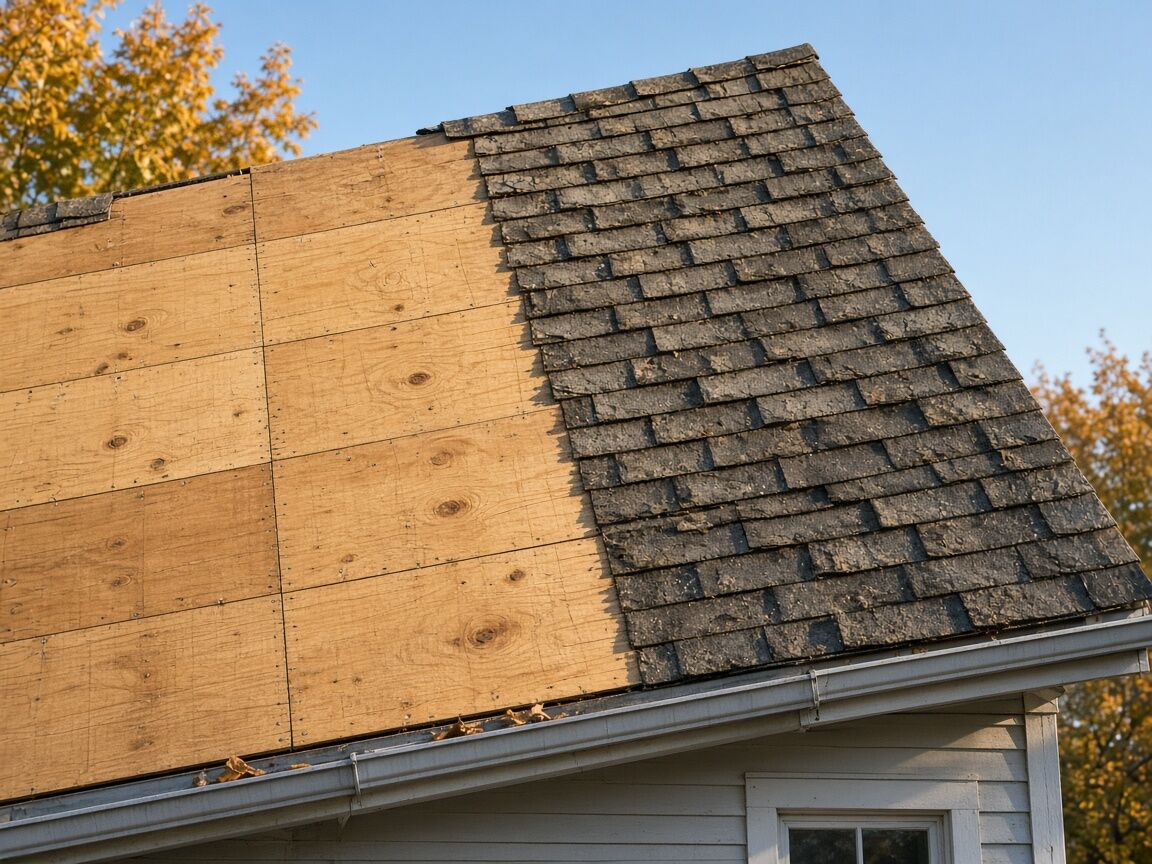
Picture made with AI for this guide.
What is a roofing contractor vs. a roofer?
The words get used interchangeably at the hardware store, but they mean different things on a job site. A roofing contractor is a licensed business owner who estimates the project, pulls permits, orders materials, supervises the crew, and makes sure the finished roof meets local building codes. A roofer is the individual tradesperson doing the physical work — nailing shingles, setting flashing, running underlayment.
Think of it this way: the contractor is the general, the roofers are the soldiers. On a residential replacement, one person sometimes fills both roles. On a larger job, the contractor manages several roofers at once.
Why does the distinction matter to you? A licensed and insured contractor carries legal accountability for permits, manufacturer warranties, and code compliance. An individual roofer hired off the books may not. If an inspection fails or a leak shows up two winters later, that accountability gap becomes very real.
What does a roofing contractor actually manage?
Estimating is the first task. The contractor measures the roof, calculates squares — one square equals 100 square feet — accounts for waste, and prices labor and materials together. Then comes the permit. Most jurisdictions require one for a full replacement, and the contractor's license is what allows them to pull it.
During the job, the contractor coordinates material deliveries, keeps the crew on schedule, and handles surprises the old deck reveals — rotted sheathing, undersized rafters, missing drip edge. After the work wraps, they arrange the final inspection and hand over documentation for the manufacturer's warranty.
All of that happens behind the scenes, which is exactly the point. You get one party responsible for the whole outcome, from the first measurement to the passed inspection. That single point of accountability is what separates a managed project from a collection of day-labor tasks.
What roofing material options are there, and how do they differ?
Common options include asphalt shingles, metal panels, clay or concrete tile, slate, wood shakes, and synthetic composites. They differ in weight, fire resistance, slope requirements, and how much experience a crew needs to install them correctly.
Asphalt shingles suit most homes and most climates. Metal roofing sheds snow well and resists fire, but installation demands an experienced crew — a poorly lapped metal panel leaks worse than a missed shingle. Tile and slate are heavy enough that a structural assessment often comes first to confirm the framing can carry the load.
Climate matters too. Metal handles freeze-thaw cycles and wildfire-prone areas well. Clay tile performs in hot, dry regions. ASTM International revised standards D3462 and D3018 in December 2025, opening the door to recycled and recovered materials in asphalt shingles — worth asking your contractor whether the product they're quoting meets that updated standard. The Cool Roof Rating Council published ANSI/CRRC S100-2025, which added testing provisions for polymer and composite roofing, relevant if you're considering a synthetic option.
What moves the price up or down on a roofing project?
Roof size is the obvious driver — more squares means more material and more labor. Complexity adds cost fast: every valley, hip, dormer, and chimney penetration requires extra cuts, flashing, and time. Steep pitch slows the crew and raises safety requirements, so labor costs climb with slope.
The condition of the existing deck matters. If the sheathing is rotted or the framing is undersized, that work gets added to the contract. Regional labor rates vary, and local building codes can require specific products or fastening patterns. The 2026 Florida Building Code requires mechanically fastened drip edge at 4 inches on center for asphalt shingles — that's a code-driven line item a contractor in that state must include.
Material choice is the single biggest variable you control. The gap between entry-level asphalt and a standing-seam metal roof is significant. Get written quotes that itemize material, labor, disposal, and permit fees separately so you can compare them honestly.
How to choose a roofing contractor
Start with license and insurance. A contractor should carry general liability and workers' compensation; ask for certificates before signing anything. A lapsed policy means any injury on your roof becomes your problem.
Local experience counts. A contractor who works regularly in your county knows the permit office, the local code amendments, and which suppliers stock the products they need. Ask how long they've operated in your area.
Get at least three written quotes. Each should list the same scope so you're comparing apples to apples — same material grade, same number of layers removed, same warranty terms. A quote that comes in dramatically lower than the others usually means something is missing from the scope, not that you found a bargain.
Check references from jobs completed in the last year or two. Drive by a finished roof if you can. Ask specifically whether the contractor pulled the permit and whether the inspection passed on the first visit.
Roof maintenance: what to do and what to avoid
Inspect twice a year and after any significant storm. From the ground with binoculars, look for lifted or missing shingles, damaged flashing at chimneys and valleys, and granule buildup in the gutters. Granule loss is a sign shingles are aging.
Keep gutters clear. Blocked gutters back water up under the eave, which accelerates deck rot and feeds ice dams in cold climates. Adequate attic ventilation and insulation prevent moisture from building up inside the deck — that's a slow killer that shows up as blistering or soft spots long before a leak appears.
Do not walk on the roof if you can avoid it, and never use a pressure washer on shingles. Both damage the surface and can send you to the ground. Ignoring a small leak is the most expensive maintenance mistake there is — water finds the path of least resistance, and by the time a stain shows on the ceiling, the damage is already wider than the stain.
The NRCA updated its Roofing Manual for architectural metal flashing in 2026 with revised guidance on drip edge for steep-slope systems. If your home has metal flashing at the eaves, that guidance is worth raising with your contractor at the next inspection.
When to call a pro instead of doing it yourself
Most roofing work belongs to a professional. Falls from roofs and ladders are the primary cause of roofing accidents, and a sloped, wet, or granule-covered surface is far more dangerous than it looks from the yard. DIY repairs also frequently create new leak paths — a misaligned patch can channel water under the surrounding shingles rather than over them.
Call a contractor for any full replacement, any repair that involves flashing, any work near a chimney or skylight, and anything that requires a permit. Ground-level checks — clearing gutters, trimming overhanging branches, looking for debris on the roof after a storm — are reasonable homeowner tasks. Everything above the eave line is a job for someone with fall protection and the right tools.
Questions people ask
Do I need a licensed contractor or can I hire an individual roofer?
For a full replacement or any permitted work, hire a licensed contractor. They carry the legal accountability for permits, code compliance, and manufacturer warranties that an unlicensed individual roofer cannot provide.
What questions should I ask a roofing contractor before hiring?
Ask for their license number and insurance certificates, how long they've worked in your county, whether they pull the permit themselves, and for references from recent jobs. Get the full scope in writing before signing.
How often should a roof be inspected?
Inspect at least twice a year — typically spring and fall — and after any major storm. Catching a lifted shingle or cracked flashing early prevents the kind of water damage that turns a small repair into a large one.
What makes one roofing material better than another for my home?
It depends on your climate, your roof's slope, and your framing's load capacity. Metal sheds snow and resists fire well; tile suits hot, dry climates; asphalt works broadly. Heavy materials like slate or tile may need a structural check first.
Why do roofing quotes vary so much between contractors?
Scope differences are the usual culprit — one quote may include deck repair, a second may not. Compare line by line: material grade, layers removed, permit fee, and warranty terms. A written, itemized quote is the only reliable comparison tool.
Read: How Much Does A New Roof Cost?
Roofers near you
Papalocal lists 57,690 roofers. Search them by town.
Related guides
 Rain Gutter Replacement: What You Need to Know
 Steel Roof Cost: What Every Homeowner Should Know
 Roofing Calculator
Your business? Claim it free