
Rain Gutter Replacement: What You Need to Know
RRoofpedia guidePublished November 20, 20261,465 words · 6 min read
Roof calculator
How many shingles will I need?
From the guide Estimates and Squares: How Many Shingles Will I Need? Roofers sell by the square: 100 square feet of roof.
- Roof area
- –
- Pitch factor
- –
- Bundles (3 a square)
- –
A starting number, not a quote. Ridge caps, starter strip and valleys add more. A roofer measures it for real.
Gutters channel rainwater off your roof and away from your foundation. When sections sag, leak at multiple joints, or the system is well past its prime, replacement beats patching. Getting written quotes from licensed installers is the only way to know what the job will cost.
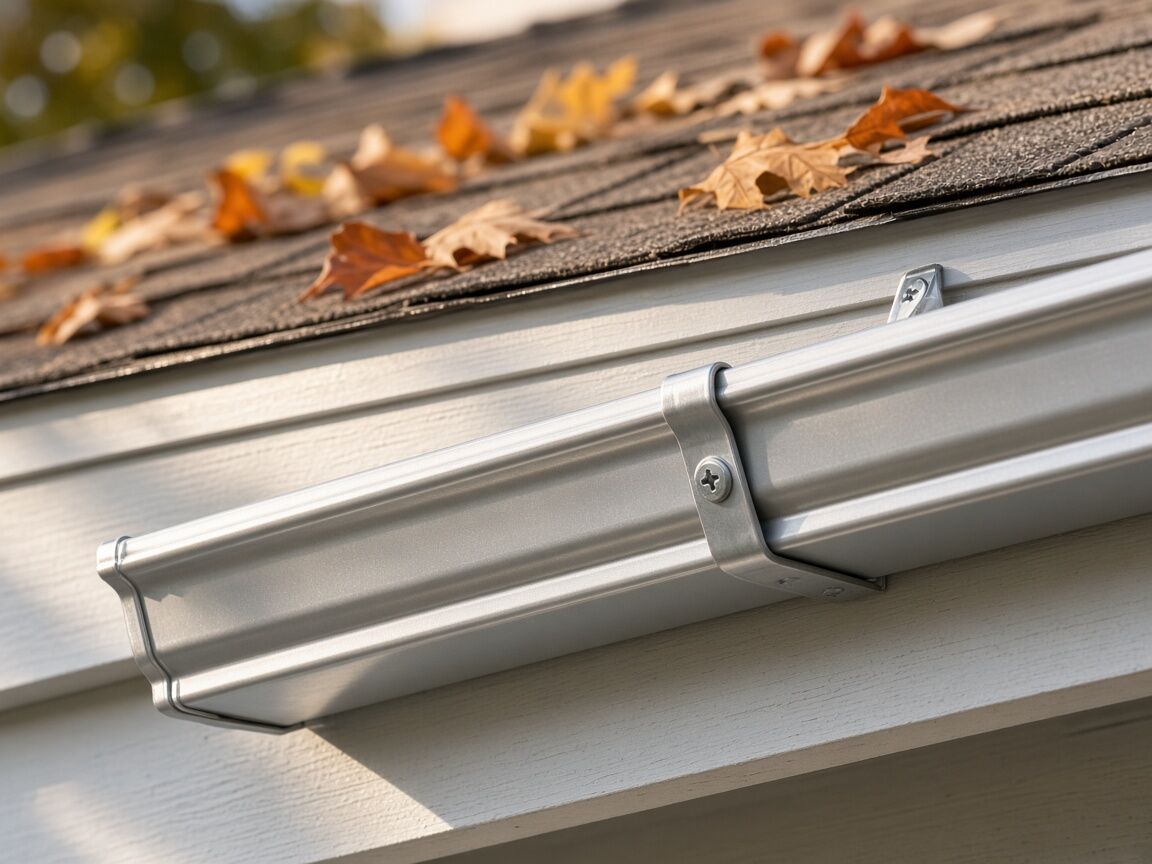
Picture made with AI for this guide.
What rain gutters actually do
A gutter system catches the sheet of water that pours off your roof during a storm and funnels it to downspouts, which carry it away from the house. Without that path, water pools at the base of the walls, works into the soil, and can undermine the foundation. The Home Depot puts it plainly: gutters collect rainwater and direct it away from the house to protect the foundation and improve overall home health.
Downspouts matter as much as the troughs themselves. The discharge point should release water at least 4 to 6 feet from the foundation. Shorter extensions push water right back to the spot you are trying to protect.
The system only works when it is sized right, pitched correctly, and clear of debris. A gutter that overflows in a moderate rain is not doing its job, even if it looks fine from the street.
Repair or replace? How to read the signs
A single leaking seam on a relatively young system is a repair job. Widespread sagging across several sections, joints that keep failing after resealing, or a system that has clearly aged past its useful life points toward full replacement. Trying to patch a system that has given out in multiple spots usually means paying twice.
Sagging is almost always a hanger problem. Hangers spaced too far apart or pulled loose from the fascia let the trough flex and hold water instead of draining. Leaking joints usually mean the sealant has failed, but one common mistake is applying fresh sealant over dirt, rust, or old material — it will not bond and the leak comes right back.
Climate plays a role too. Heavy freeze-thaw cycles stress every joint and bracket more than a mild southern winter does. A system that looks marginal in a dry climate may already be past its limit somewhere that gets hard freezes every year.
Gutter materials compared: aluminum, vinyl, copper and more
Aluminum is the most common residential choice. It does not rust, takes paint, and is light enough for one-person installation. Vinyl costs less upfront but becomes brittle in hard cold and can sag in summer heat. Galvanized steel is strong but will rust at cut edges and scratches if the coating is not maintained. Stainless steel and zinc resist corrosion well and carry a longer service life, though both cost more. Copper develops a patina over time and is often chosen for historic or high-end homes.
The material you pick affects how often you will be back on a ladder. Aluminum and copper need little attention beyond cleaning. Vinyl and galvanized steel ask for more frequent inspection, especially at joints and cut ends.
For high-rainfall regions, a 6-inch K-style profile in seamless aluminum is widely recommended by installers because the larger opening handles heavier flow without backing up.
Sectional vs. seamless gutters: what the difference means
Sectional gutters come in standard lengths, usually about 10 feet, and are joined on-site with connectors and sealant. Every joint is a potential leak point, and there can be many of them on a long run. They are available at home centers and can be a DIY project on a single-story house with the right tools and a helper.
Seamless gutters are roll-formed on-site from a continuous coil of metal, cut to the exact length of each run. The only joints are at corners and downspout outlets, so there are far fewer places for water to escape. The trade-off is that seamless gutters require a machine and a trained operator, so they are always a professional installation.
For most homes, seamless aluminum hits the balance of performance, cost drivers, and low maintenance. Sectional systems can still make sense for a short run or a budget-limited repair.
How a gutter replacement is done
The installer pulls the old gutters and downspouts first, then inspects the fascia board behind them. Rotted or soft fascia has to be replaced before anything new goes up — new gutters on bad wood will fail quickly.
New gutters attach to the fascia with hangers spaced every 18 to 24 inches; wider spacing is one of the main reasons gutters sag. The trough is pitched toward the downspout at roughly 1/4 inch for every 10 feet of run. That slope looks invisible to the eye but keeps water moving rather than sitting.
Downspouts are connected, sealed at every joint, and extended so discharge lands well away from the foundation. A final flush with a hose confirms the slope is right and nothing is backing up. The NRCA Roofing Manual 2026 edition includes updated details for gutter systems with internal and external reinforcing brackets, worth asking about on commercial or large residential jobs.
Gutter guards, sensors, and what's new in 2026
Gutter guards reduce how often you need to clean, but they do not eliminate cleaning entirely. Micro-mesh guards filter debris through a fine screen and perform better than open-top covers or foam inserts, but even micro-mesh should be inspected periodically. Shingle grit and fine organic matter can still accumulate on the mesh surface.
On the product side, AFAB introduced the StormChaser system in late 2026 with pre-installed internal brackets and pre-punched holes aimed at faster commercial installation. SPRI also revised the ANSI/SPRI GT-1 standard in 2026, which sets test methods for load resistance on external gutter systems and is referenced in the International Building Code — worth asking about when a contractor specifies gutters on a low-slope or commercial roof.
Some higher-end systems now include IoT flow sensors and integrated heat cables that prevent ice buildup in freeze-prone climates. Robotic on-site roll-forming is also entering the market, improving consistency on seamless runs.
Maintenance schedule and when to call a pro
Clean gutters twice a year — spring after tree pollen and seeds finish falling, and fall after the last leaves drop. Flush downspouts with a hose to confirm they are clear all the way through, then check every bracket and look at the sealant at joints and end caps.
For ladder work above a single story, use a stable ladder on firm level ground, stay away from power lines, work on dry calm days, and wear gloves and eye protection. If the roofline is steep, the gutters are on a second story or higher, or the fascia feels soft when you press on it, call a licensed contractor. Fascia replacement behind gutters means working close to the roof edge, and that is not the place to improvise.
Any time you see water staining on the fascia or soffit, or soil erosion directly below a downspout, get someone up there before the next rain. Small problems caught early stay small.
Questions people ask
How do I know if I need gutter replacement or just a repair?
Isolated leaks on a relatively young system usually call for repair. Sagging across several sections, joints that keep failing, or a system well past its useful life points to full replacement. A licensed installer can tell you which applies after a quick look.
What is the difference between seamless and sectional gutters?
Seamless gutters are roll-formed on-site in one continuous piece per run, so joints only appear at corners and downspout outlets. Sectional gutters join roughly every 10 feet, giving water more places to escape. Seamless systems have fewer leaks but always require a professional with forming equipment.
How far should downspouts discharge from the foundation?
At least 4 to 6 feet from the foundation wall. Shorter extensions push water back toward the footing, which is exactly what the gutter system is meant to prevent.
What moves the cost of gutter replacement up or down?
Material choice, linear footage, number of stories, fascia condition, number of downspouts, and whether you add gutter guards all affect price. The only way to know what a specific job costs is to get written quotes from licensed installers.
Do gutter guards mean I never have to clean gutters again?
No. Micro-mesh guards cut down on debris inside the trough, but fine grit and organic matter can still collect on the mesh surface. Periodic inspection and occasional cleaning are still needed, just less often.
How often should gutters be cleaned and inspected?
Twice a year covers most homes — once in spring after seeds and pollen settle, once in fall after leaves finish dropping. Homes under heavy tree cover may need more frequent attention. Flush downspouts each time and check every bracket and seal.
Read: Gutter Repair: Options, How-To, and When to Call a Pro
Roofers near you
Papalocal lists 57,686 roofers. Search them by town.
Related guides
All roofing guides

Your business? Claim it free