
Gutter Repair: Options, How-To, and When to Call a Pro
RRoofpedia guidePublished November 10, 20261,480 words · 6 min read
Free tool
Try new gutters on your houseGutter colors against your roof and siding, in the house designer.Gutter repair fixes leaking seams, loose hangers, small holes, and bad slope before water reaches your foundation or siding. The right fix depends on what failed and how old the gutter is. Clean the surface first, match the product to the material, and correct the slope before you seal anything.
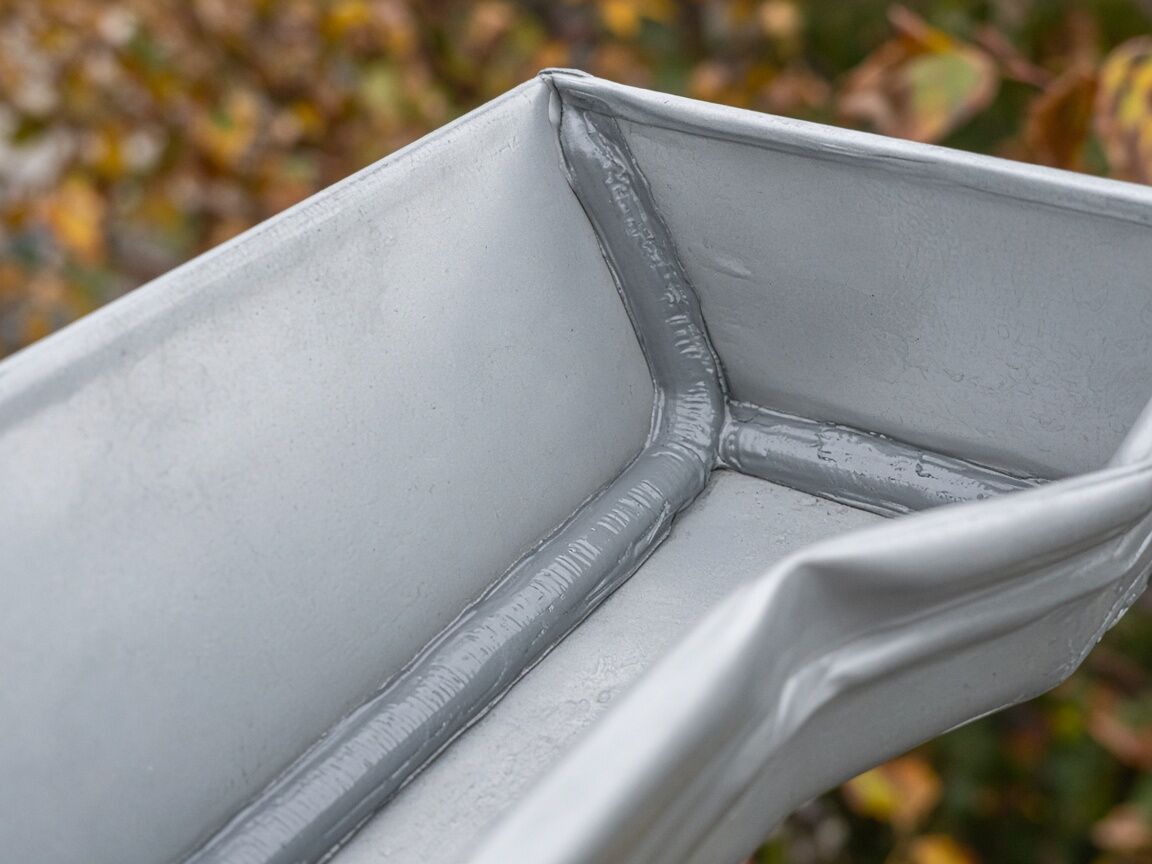
Picture made with AI for this guide.
What gutter repair actually fixes
A gutter system fails in a handful of predictable ways: seams open up and drip, hangers pull loose so a section sags, small holes rust through, slope reverses so water pools instead of draining, or clogs add enough weight to stress the whole run. Each problem sends water somewhere it shouldn't go—against the fascia board, down the siding, or straight toward the foundation.
Repair addresses one or a few of those problems on an otherwise sound gutter. It is not the right call when rust has eaten through several sections, when the fascia behind the gutter is rotted, or when the same joint has been resealed more than once and keeps opening. Those situations point toward section replacement or a full new run.
How a gutter repair is done, step by step
The sequence matters more than most people expect. Start by clearing every bit of debris out of the gutter and letting the surface dry completely. Sealant applied over dirt, old caulk, or moisture will peel back within a season.
Next, check slope. A gutter should drop roughly a quarter inch for every ten feet of run toward the downspout. If water is sitting in the channel, no amount of sealant will stop the next overflow. Adjust hangers first, then seal.
For a leaking seam, clean back to bare metal, run a continuous bead of flexible sealant along the inside of the joint, and tool it smooth. A second bead on the outside adds insurance. For a small rust hole, wire-brush the rust away, clean the area, then bed an aluminum patch in sealant and press it flat. Larger corroded areas need the section swapped out rather than patched.
Gutter sealant options and how they differ
Not every sealant works on every gutter material, and that mismatch is one of the most common reasons a repair fails fast. Vinyl gutters expand and contract more than aluminum or steel, so rigid or hard-setting products crack at the joint. Use a flexible product rated for vinyl specifically.
For aluminum and steel, flexible polyurethane or butyl sealants bond well and stay pliable through temperature swings. Tripolymer formulas have become a go-to for installers who need adhesion across multiple materials. Bobvila.com's 2026 testing named Geocel 2320 tripolymer sealant the top pick for adhesion to all gutter types and for bridging gaps up to a quarter inch.
Whatever product you choose, read the label for cure time before running water through the gutter. Rushing that step is another common way a repair fails before winter.
Gutter hangers: spike-and-ferrule vs. hidden hangers
Hangers hold the gutter to the fascia and set the slope. The older spike-and-ferrule system drives a long nail through the front of the gutter, through a metal sleeve, and into the fascia. Over time those nails back out, the gutter droops, and hammering them back into the same hole does nothing because the wood is already stripped.
The fix is to pull the spike, fill the old hole, and drive a hidden hanger screw into solid fascia wood nearby. Hidden hangers clip inside the gutter and fasten with a screw rather than a nail, so they resist backing out far better. Hanger spacing matters too—improper spacing during the original install is a widely cited cause of premature failure among experienced installers.
If the fascia itself is soft or punky, no hanger will hold until that board is replaced. That job requires getting behind the gutter, which is where a pro call makes sense.
Repair or replace: how to decide
A useful rule of thumb: if the gutter is under roughly fifteen to twenty years old, the problems are isolated to one or two spots, and the fascia behind it is solid, repair is usually the right move. Once rust has spread across multiple sections, or the same area has been patched repeatedly, replacement stops the cycle rather than extending it.
Material condition tells you a lot. A single pinhole in aluminum is a patch job. A section where the metal flexes and crinkles when you press it means the metal has thinned past the point where sealant can help.
An emerging option for gutters that are structurally sound but leaking throughout is a liquid-applied polymer lining. The product is brushed or rolled inside the existing gutter to form a seamless waterproof membrane, avoiding a full tear-off. It is a newer practice and not every contractor offers it, so ask specifically if you want to explore it.
Gutter care and upkeep to prevent repairs
Clean gutters at least twice a year—spring after pollen and seed pods fall, and late fall after the last leaves drop. If trees overhang the roof, add a third pass in summer. Debris sitting in the channel holds moisture against the seams and adds weight that stresses hangers.
After any significant storm, walk the perimeter and look for sections that have pulled away from the fascia, downspouts that have separated at a joint, or pooling water along the foundation that signals a clog. Catching those early keeps a five-minute fix from becoming a section replacement.
Trim branches that hang over the roof. Leaf volume drops sharply when the source is cut back, and branches scraping the gutter during wind can crack or dent it. Tighten visible fasteners once a year—it takes minutes and prevents the slow creep of a sagging run. Micro-mesh gutter guards with stainless steel mesh reduce cleaning frequency and block the debris that leads to clogs and overflow, though no guard eliminates cleaning entirely.
When to call a pro instead of doing it yourself
Single-story seam sealing or a hanger swap at ground-floor height is manageable for a careful homeowner with a stable ladder, gloves, eye protection, and non-slip footwear. Never lean the ladder against the gutter itself—the channel is not built to take that load.
Call a pro when the work is on a second story or higher, when the fascia needs repair before the hanger can be reset, when you find rot or damage that extends behind the gutter into the roof deck, or when the slope correction requires re-hanging a long run. Professionals increasingly use drone-assisted inspection to assess high or complex gutters without a ladder, giving a precise picture of slope and damage before any work begins. That approach is worth asking about if access is difficult or the roof pitch is steep.
Questions people ask
Can I seal a leaking gutter seam myself?
Yes, on a single-story gutter with a stable ladder and the right sealant. Clean to bare metal, let it dry fully, then run a continuous bead of flexible polyurethane or tripolymer sealant inside the joint. Correct the slope first—sealing a low spot just traps water behind the patch.
What sealant works on vinyl gutters?
Vinyl expands and contracts more than metal, so use a flexible sealant rated specifically for vinyl. Rigid or hard-setting products crack at the joint as the material moves. Check the label before buying—compatibility is listed there.
Why does my gutter sag even after I push it back up?
Sagging usually means the hangers have pulled out of the fascia or the original spike holes are stripped. Pushing the gutter up without replacing the fasteners lets it drop again. Pull the old spikes, install hidden hanger screws into solid wood nearby, and check that the fascia itself is not rotted.
How do I know if I should repair or replace the gutter?
Isolated damage on a gutter under about fifteen to twenty years old with solid fascia behind it is a repair candidate. Rust through multiple sections, repeated failures at the same joint, or soft fascia that won't hold a hanger point toward replacement rather than another patch.
Do gutter guards reduce how often I need repairs?
They reduce debris buildup, which cuts down on clogs, overflow, and the hanger stress that comes from standing water weight. Micro-mesh guards with stainless steel mesh perform better long-term than foam or brush types, though no guard eliminates cleaning entirely.
What moves the cost of gutter repair up or down?
The number of problem spots, how accessible they are (single-story costs less to reach than higher), whether the fascia needs repair at the same time, and the gutter material all affect the price. Get written quotes from more than one contractor—that is the only way to know the actual number for your job.
Gutter cleaners near you
Papalocal lists 23,207 gutter cleaners. Search them by town.
Related guides
 French Drains: What They Are and How to Get One Right
 Gutter Guard Types Compared
 How To Clean Underground Gutter Drains
Your business? Claim it free