
Zinc and Copper Strips for Moss
RRoofpedia guidePublished October 31, 20261,509 words · 7 min read
Free tool
Moss checkThree taps: how much moss, how much shade, how old the roof is.Zinc and copper strips prevent moss rather than remove it: rain washes a trace of metal off each strip and down the slope, and moss, algae and lichen struggle to take hold where that water runs. They protect the band of roof below the strip, so install them on a clean roof and expect them to slow regrowth, not clear a thick mat.
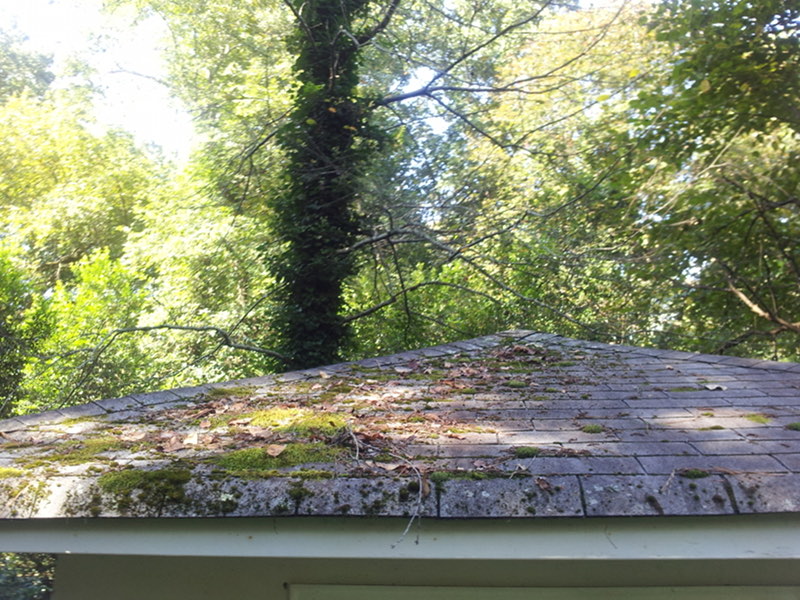
How zinc strips stop moss on a roof
A strip of bare zinc or copper left out in the weather slowly corrodes, building a thin surface layer of metal compounds. Rain dissolves a little of that layer every time it falls and carries it down the shingles below. Moss spores and algae that land in that water get a dose of metal they can't tolerate, so new growth struggles to start.
Three things follow from that. The strip only protects what is downhill of it, so nothing above it or off to either side benefits. It only works when rain actually reaches it, so a strip tucked under a deep overhang does little. And the dose is strongest right under the strip, thinning out as the water spreads and soaks into debris on its way down.
That is why strips are prevention. Thin, young growth sitting in the runoff may fade over the following seasons, but a thick, established mat soaks up the water before much metal reaches its base. Kill and clear the moss first, then let the strips keep the roof from growing a new crop.
Copper vs zinc strips for roof moss
Copper is harder on moss and algae than zinc, so a copper strip gives a stronger effect for the same width, and it costs noticeably more. It goes on bright orange, then darkens to brown and can eventually turn green. Zinc dulls to a soft gray that disappears against most shingle colors, which is part of why it is the common choice.
Galvanized strips, which are steel with a zinc coating, cost the least. They work while the zinc lasts, but once the coating wears through, the steel underneath can rust and leave orange streaks on the shingles. Solid zinc or copper avoids that. Copper wire strung across the roof is another budget option, though a thin wire has so little exposed surface that it releases far less metal than a flat strip.
Think about what sits below. Water that has run over copper can corrode aluminum gutters and galvanized or aluminum-zinc coated metal it lands on, and it can leave blue-green stains on light concrete, stone or siding. If your gutters are aluminum, ask the installer how they handle that before choosing copper.
How far down the roof do zinc strips protect?
The protected band is limited, and its length depends on how much rain falls, how much metal is exposed and how the water travels over the shingles, so no single distance holds on every roof. Some strip makers' instructions call for a second row partway down once a slope runs more than about 14 feet below the ridge, and many installers follow a similar rule of thumb.
Moss often starts where a ridge strip reaches least. The bottom courses near the gutters stay damp longest, collect needles and leaves, and sit in the shade of the eave and nearby trees. A single strip at the top of a long slope can leave exactly that area unprotected, and owners decide strips don't work. A second row above the trouble zone fixes it.
Look also at anything that splits the flow. Dormers, chimneys, skylights and plumbing vents send water around them, leaving a dry shadow below where runoff from the ridge never arrives. Valleys gather water off two slopes and carry it away. Each of those spots, and each lower roof below a wall, needs a short strip of its own just above it.
How to install zinc or copper strips on a shingle roof
Strips go on after the roof is clean and dry. On each face, the usual spot is the first course of shingles below the ridge cap or ridge vent, running the full length of the slope. On a hip roof every face needs its own run, since water from one face never crosses to the next. Keep the strip clear of the ridge vent's openings.
Most instructions have you slip only a narrow edge of the strip, about an inch, under the course above, so most of the metal stays out in the rain. Fasten it with corrosion-resistant roofing nails fitted with neoprene washers, placed where the shingles above will cover the heads, or bond it with a roofing adhesive if the strip maker allows it. Match the nails to the strip: copper with copper, galvanized with zinc.
Lifting shingles breaks their seal, so reseal each one with a dab of roofing cement the way the shingle maker describes. Work on a mild day; cold shingles crack when lifted and hot ones scuff and tear. The ridge is the highest, most exposed spot on the house, so most homeowners leave this to a roofer or roof cleaner with fall protection.
Zinc strip problems: shingle damage, warranties and runoff
Done carelessly, a strip job does more harm than the moss. Nails driven through exposed shingles leave holes that leak, strips fastened too loosely rattle and lift in wind, and shingles bent back in the cold crack along the fold. Ask any installer where the fasteners go and how they reseal what they lift.
On a newer roof, read the shingle warranty before anyone climbs up. Shingle makers cover defects in their own product, not damage caused by things fastened to it, so a botched install isn't theirs to fix. Some shingle and vent makers sell zinc strips under their own names with their own instructions, a fair sign that a careful install suits their roofs, but read the terms that apply to yours.
Runoff is the last check. Zinc and especially copper in rainwater are hard on fish and other water life, so think twice if downspouts feed a pond, a stream, a rain garden or a barrel you water vegetables from. Some owners in those spots skip strips and rely on trimming trees and periodic treatments instead.
Zinc strips vs other ways to keep moss off a roof
Strips are one part of a plan, not the whole of it. Sun and airflow do more than any metal: cutting back overhanging limbs lets the roof dry after rain, and moss needs a roof that stays wet. Keeping the roof and valleys clear of needles and leaves takes away the damp bedding it grows in. Strips then handle the spores that keep landing.
The alternatives each trade something. A moss treatment sprayed at low pressure covers the whole roof, top to bottom, but has to be repeated and has its own runoff. Algae resistant shingles carry copper in their granules across the entire surface, which beats any strip for coverage, but they only come with a new roof. Strips are the middle ground for a roof with plenty of life left.
What a strip job costs depends on the total length of ridges and hips, how many dormers and chimneys need short strips, zinc or copper, and how steep and high the roof is. Since the crew is already up there, ask roof cleaners to quote strips together with the moss treatment.
Questions people ask
Do copper strips work better than zinc strips for moss?
Copper is more toxic to moss and algae, so it gives a stronger effect for the same exposed width. It also costs more, changes color as it weathers, and can stain light surfaces or corrode aluminum gutters below. Zinc is milder, cheaper and blends in, so most roofs get zinc.
Will zinc strips kill moss that is already on my roof?
Not quickly. Thin new growth in the runoff may fade over time, but thick moss soaks up the water before much metal reaches its roots. Treat and clear the moss first, then install strips to slow its return.
Where do zinc strips go on a roof?
Just below the ridge cap or ridge vent on every face, plus short strips above dormers, chimneys, skylights and lower roofs that ridge runoff never reaches. On long slopes, add a second row partway down.
How long do zinc strips last on a roof?
Solid zinc and copper strips wear away very slowly and usually keep working through a long stretch of the roof's life, as long as rain reaches them. Galvanized steel strips give out sooner, once their zinc coating wears through and the steel begins to rust.
Can I install zinc strips myself?
If you can work safely at the ridge with fall protection, yes; strips are sold in rolls at roofing suppliers and home centers. Most people hire it out because the job sits on the highest part of the roof and lifting shingles carelessly breaks their seals.
Roof cleaners near you
Search them by town on Papalocal.

Your business? Claim it free