
Shingle Roofs
RRoofpedia guideCredits: Sherriff-Goslin2,626 words · 11 min read
Free tool
Try a new roof on your housePick shingle colors on a house in the house designer, with siding, trim and gutters to match.A shingle roof is a sloped roof covered in overlapping rows of shingles, usually asphalt, laid from the eaves up so each row sheds water onto the one below. It is the most common roof on American houses because it is light, quick to install and cheaper than metal, tile or slate.
What is a Shingle Roof?
A Shingle roof is a roof that is covered with a type of material called shingles. One of the elements or factors that organizes this type of roof into its own category is the shape and functionality of the shingles themselves. Shingles are generally flat and rectangular and they are applied from the base or bottom of the roof upwards. As they are applied the previous sheet or section of shingles is overlapped. This process of overlapping continues until the entire roof has successfully been covered from base to top.
Benefits of Shingle Roofs
Having a shingle roof can have many great benefits. Some of these benefits manifest themselves right away, and others become more evident as time passes. Here is a list of the greatest benefits of having a shingle roof.
Cost Efficient
The cost efficiency is one of the many benefits of having a shingle roof. Asphalt shingles are manufactured and purchased in bulk. Because of this, these shingles come cheaper than other roofing materials.
Installation
Shingle installation takes much less expertise than installation of other materials, so that makes them more cost efficient as well. Shingles have been named as the easiest material to install for roofs, so labor of installation does not cost as much as it would for other roofing materials.
Weight
Asphalt shingles are some of the lighter roofing materials as compared to slate, tile, and some metal. The structure of your home will determine how heavy your roofing material can be, homes can handle asphalt shingles well because they don’t impose much weight on the structure of the home.
Look, Color and Texture
Shingles can come in almost any different color! This makes choosing a color for your home easy, because the colors are versatile and work well with any home. Asphalt shingles also come in a variety of different textures/styles or designs. These different textures allow them to look like different materials such as shake, slate, or tile. It can be fun choosing your shingle design because there are so many to choose from!
Durability
Asphalt shingle roofs last a long time. Most shingle roofs can have a lifespan anywhere between ten and thirty years! These roofs are easy to repair if there is ever a leak. The durability of shingle roofs make them a great choice for any new roof.
History of Shingle Roofs
The asphalt shingles that cover most homes in the United States spawned from the wooden shingle. The wood shingle or shake has been used for thousands of years throughout the world. The process of manufacturing the wood shingle traditionally was done by hand. Not until the 19th century was the process dramatically improved with the invention and use of steam-powered saw mills. Although this new advancement moved the shingle forward in being a preferred roofing material, it still wasn’t quite like the asphalt shingles we have today.
We first started to see signs of homes being covered with a type of composite roofing material in the 1840s in the New England area. These first roofs were covered with a fabric or felt type material that was later coated in a tar sand mixture. Within no time this new way of roofing began to evolve. The next step was to apply an asphalt saturated fabric or material to the roof and then apply a granulated material on top of it.
The Asphalt Shingle Takes Shape
It wasn’t until 1903 that the composite tarp like roofing product began to shrink in size. The credited father of taking the large roll roofing and cutting it into individual shingles has been given to Henry Reynolds. Henry was a professional in the industry and innovator of his day. This idea of individually cutting shingles was later pushed forward with the help of many others. One such group was the NBFU (National Board of Fire Underwriters). This board pushed to get rid of the fire hazardous wood/shake shingles. With this push to promote asphalt shingles and other factors caused by World War I and increased manufacturing capabilities the asphalt shingle began to emerge as a leading player in residential roofing materials.
The Shingle Took On Many Different Sizes, Shapes, and Designs
From 1915 to about 1930 the shingle was really in the experimental age. The original size that the first shingles were cut into went from a 8″ x 16″ to a 8″ x 12″ 1/2″ shingle. Along with the shingle size changing, so did the colors and shapes. In the beginning the most common colors for the surface material on the shingles were green and black.
The next big change in shingles was the introduction of tabs. This innovation turned the asphalt shingle into a dimensional look, much like the wood shingles that had been used for so long but the shingle didn’t stop there. By the 20s shingles really began to change shape. Many different shapes and styles were tried. Some of these were diamonds, squares, rectangles, shingles that seemed to be thatched, and so forth. It wasn’t until 1930 that the shingle began to slow down due to the Great Depression. After the Great Depression and Word War II the shingle began to evolve yet again.
The Shingles We Have Today
Comparing the asphalt shingles we have today vs those of the past reveals some major differences. Below is a basic table or list comparing our modern day asphalt shingles to their ancestors.
The Shingle of the Past
The Modern Day Asphalt Shingle
Fabric Mats
Fibrous Glass Mats
Roll Roofing
Individually Cut Shingles
Black and Green Colors
Wide Array of Color Selection
No Tabbed Shingles
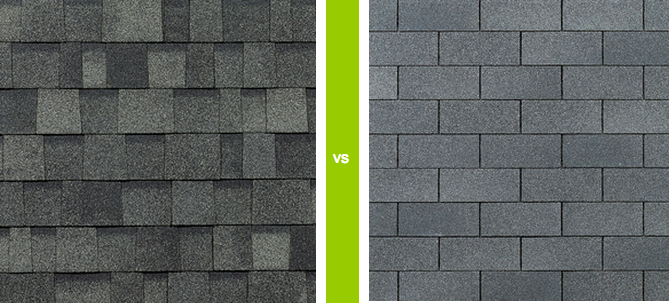
Tabbed Shingles & Architectural Shingles
List of Shingle Manufacturers
Atlas
Bio: Atlas Roofing Corporation started out manufacturing roofing products in 1982 in Meridian, MS. In the beginning Atlas simply manufactured asphalt shingles and roll roofing products. Now, over 30 years later Atlas has multiple manufacturing facilities inside and outside of the United States and are one of the leading manufacturers of both residential and commercial roofing products.
Headquarters: 802 Highway 19 North Meridian, MS 39307
Contact Information: Toll Free: (800) 388-6134
Logo:
CertainTeed
Bio: CertainTeed started out in the year 1904. The company was originally named The General Roofing Manufacturing Company. It was started by George Brown in St. Louis, Illinois. Now the company’s name is CertainTeed and is a sumsidiary of Saint-Gobain. CertainTeed currently employs thousands of people and has facilities scattered through the U.S. and Canada.
Headquarters: 750 East Swedesford Road Valley Forge, PA 19482
Contact Information: Phone: (610) 341-7000
Logo:
GAF
Bio: The company was officially founded in 1886 as The Standard Paint Company. Based on The Standard Paint Company’s success in the asphalt shingle industry it changed its name to Ruberoid Company in 1921. This name however didn’t stick because the company merged with GAF and took on its new name. GAF continues to immerge as a leader in the roofing manufacturing industry. “GAF has become North America’s largest manufacturer of commercial and residential roofing.”
Headquarters: 1361 Alps Road Wayne, New Jersey 07470
Contact Information: 1-973-628-3000
Logo:
IKO
Bio: IKO is a leading manufacturer of roofing materials throughout the United States, Canada, and Europe. With his experience in his father’s roofing manufacturing business in Poland, Mr. Koschitzky set out on his own after World War 2 to start IKO in Calgary, Alberta in 1951. Since its creation, IKO has remained a family owned business. IKO currently manufacturers shingles, commercial roofing materials, and many other roofing/construction products.
Headquarters: IKO Calgary 1600-42nd Ave. S.E. Calgary Alberta T2G 5B5, Canada
Contact Information: 403-265-6022
Logo:
Malarkey
Bio: In 1956 Malarkey was founded by Herbert Malarkey. Soon after starting his business Malarkey began manufacturing shingles. Ever since then Malarkey has continued to be innovative. As of, July 2013, Malarkey is still a family owned business with locations in the United States.
Headquarters: P.O. Box 17217 Portland, OR 97217
Contact Information: (503) 283-1191
Logo:
Owens Corning
Bio: Owens Corning is a building materials manufacturer. They have successfully managed to maintain their fortune 500 status for 59 years (As of 2013). The company was founded in the 1930s and today is a common name among contractors and builders.
Headquarters: 1 Owens Corning Pkwy Toledo, OH 43659
Contact Information: 1-800-438-7465
Logo:
PABCO
Bio: PABCO is a building products manufacturer. One of the main products that this company produces is asphalt shingles. In fact, PABCO began manufacturing asphalt shingles in 1984. PABCO continues to manufacturer shingle roofing products for homes throughout the United States.
Headquarters: 1718 Thorne Road Tacoma, WA 98421-3207
Contact Information: 1-800-426-9762
Logo:
Sherriff-Goslin Co.
Bio: The Sherrif-Goslin Company has been in the United States for more than 100 years. The company started in 1906 by a Mr. W.E. Polhemus. The company proved to be innovative with their diamond shaped asphalt shingles for residential homes. This new innovation helped the company succeed into becoming a prominent roofing company. Today the company continues to both manufacturer asphalt shingles and install them through their professional Sherriff-Goslin contractors.
Headquarters: 10 Avenue C Battle Creek, MI 49037
Contact Information: 269-962-4036
Logo:
Tamko
Bio: TAMKO building products has been around since 1944. Its founder, E.L. Craig, started the company as a 69 year old man. His company would later be continued on by his wife, daughter, son-in-law, and grandson. The TAMKO name is a well known roofing and building products manufacturing name in the United States.
Headquarters: 220 West 4th Street P.O. Box 1404 Joplin, MO 64802
Contact Information: 1-800-641-4691
Logo:
What is under the shingles on an asphalt shingle roof
The shingles are only the top layer. Under them is the roof deck, usually plywood or OSB sheets nailed to the rafters or trusses. On the deck goes underlayment, either the older asphalt felt or a synthetic sheet that is lighter and tears less. Along the eaves, in valleys and around chimneys and skylights, roofers lay a self-sticking leak barrier, often called ice and water shield, that seals around the nails driven through it. Many codes require it at the eaves in cold climates.
Metal drip edge runs along the eaves and rakes to carry water past the fascia and into the gutter. A starter strip comes next, then the field shingles, then step flashing where the roof meets a wall, boots around plumbing vents, and caps along the hips and ridge. Vents at the soffit and ridge let the attic breathe so the shingles aren't cooked from below.
When a shingle roof leaks, the cause is far more often one of these supporting pieces than the shingles themselves. That is why a good quote names each layer, and why a cheap one often leaves several out.
Metal roof vs shingles
Metal and asphalt shingles are the two choices most homeowners weigh. Shingles cost less up front, go on faster, are easy to patch, and almost any roofer can work on them. Metal costs more to install and needs a crew that does metal regularly, but it usually lasts a good deal longer, sheds snow and leaves quickly, and resists being peeled off by wind once it is fastened right.
Looks and noise come next. Standing seam metal has a clean, modern line; metal shingles can pass for shake or slate. Rain on metal laid over a solid deck with underlayment and an insulated attic is quieter than most people expect; the loud metal roofs are usually on open barns. Large hail can dent metal, and some policies treat dents that don't leak as cosmetic and won't pay for them.
The fairest comparison is cost over the time you will own the house. If you plan to stay a long time, metal's longer life can offset its higher price. If you may sell soon, or your roof is cut up with dormers and valleys that make metal costly to fit, a well-installed architectural shingle roof is usually the better value.
Minimum roof pitch for shingles
Shingles work by gravity. Each row overlaps the one below, and water runs off before it can back up under the edges. On a roof that is too flat, water moves slowly, wind pushes it uphill and ice can dam it, so it finds the nail holes. That is why shingle makers and building codes set a minimum slope.
Asphalt shingles are generally allowed down to a pitch of 2/12, meaning the roof rises 2 inches for every 12 inches of run. From 2/12 up to 4/12 counts as low slope for shingles, and the rules call for extra protection: a double layer of underlayment or a full leak barrier, laid the way the shingle maker's instructions spell out. At 4/12 and steeper, a single layer of underlayment is the norm.
Below 2/12, shingles are the wrong material. Porches, additions and flat sections at that slope need a low-slope roof such as modified bitumen, TPO or EPDM, flashed into the shingles where the two meet. If you see shingles on a nearly flat porch roof and a stain on the ceiling under it, the pitch is often the reason.
Can you put a new roof over existing shingles?
Codes in most places allow one layer of new shingles over one old layer, a job roofers call a layover or roof-over. Building codes generally forbid it when there are already two layers, when the old roof is water soaked or too deteriorated to make a sound base, or when the old covering is slate or tile. Your local building department has the final word, and some towns require a full tear-off.
A layover saves the cost of tearing off and hauling away the old shingles, and the house is open to weather for less time. The trade-offs are real. Nobody sees the deck, so rot and soft spots stay hidden. New shingles over old lumps show the bumps, the added weight stays on the framing, and flashing is often reused instead of replaced. Many makers limit or refuse their stronger warranties on a layover.
Metal over old shingles is a separate case. Some metal systems are designed to go over one layer of shingles, often on furring strips with new underlayment, and that can be a sound choice. Ask the installer whether the maker approves it and how the space will be vented.
Questions people ask
How much does it cost to reshingle a roof?
It depends on the roof's size in squares, its pitch, how many old layers come off, how much rotted decking must be replaced, the shingle line and local labor rates. Get at least three written quotes that list the same items so you can compare them line by line.
Is a metal roof louder than shingles in the rain?
Over a solid deck with underlayment and an insulated attic, rain on metal is only a little louder than on shingles. The loud metal roofs people remember are usually on open-framed barns and sheds with nothing under the panels.
What color shingles keep a house cooler?
Lighter colors reflect more sun and run cooler on the roof surface, and some makers sell reflective shingles rated for cool-roof programs. How much it helps inside depends mostly on attic insulation and ventilation.
Is it safe to walk on a shingle roof?
A roofer can, with care and soft-soled shoes, on a roof that isn't too steep or wet. Walking on hot shingles scuffs off granules and cold ones can crack, so homeowners are safer looking from a ladder or with binoculars.
This guide was updated in October 2026 with new sections and the questions people ask most.
Roofers near you
Papalocal lists 57,576 roofers. Search them by town.
Related guides
All shingles guides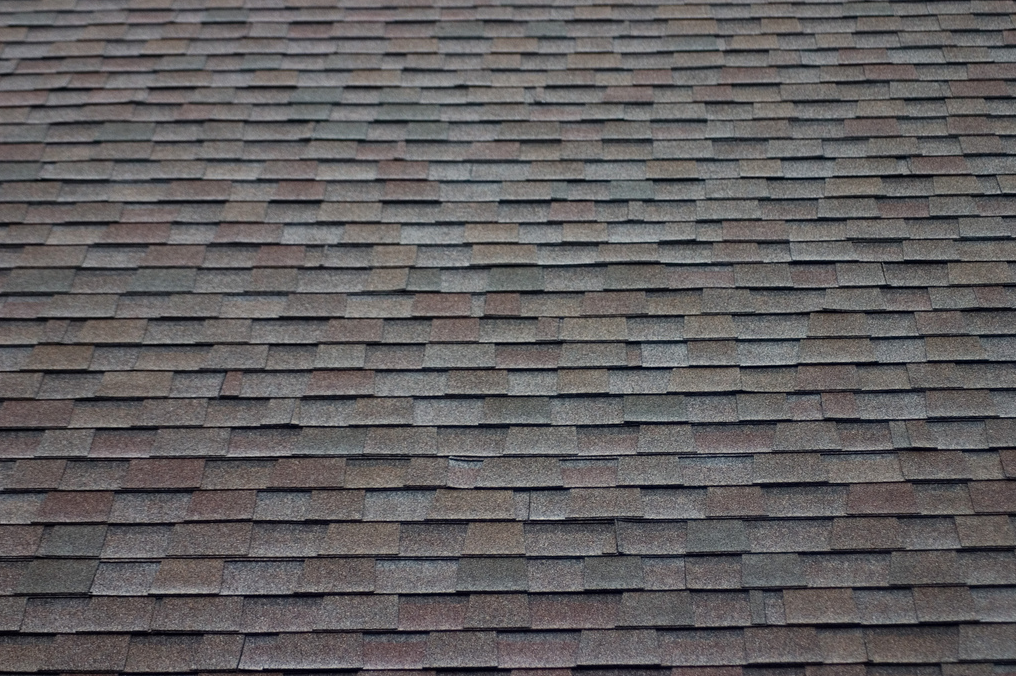
Your business? Claim it free