
Ice Dams: Why They Leak and How to Stop Them
RRoofpedia guidePublished November 3, 20261,453 words · 6 min read
Free tool
Compare roofing quotesPrice per square, side by side, and what each quote leaves out.An ice dam is a ridge of ice along the roof edge that holds back meltwater, which then backs up under the shingles and leaks into walls and ceilings. It forms when heat escaping into the attic warms the upper roof while the overhang stays below freezing, so the lasting fix is a cold roof deck: sealed attic air leaks, enough insulation and steady ventilation.
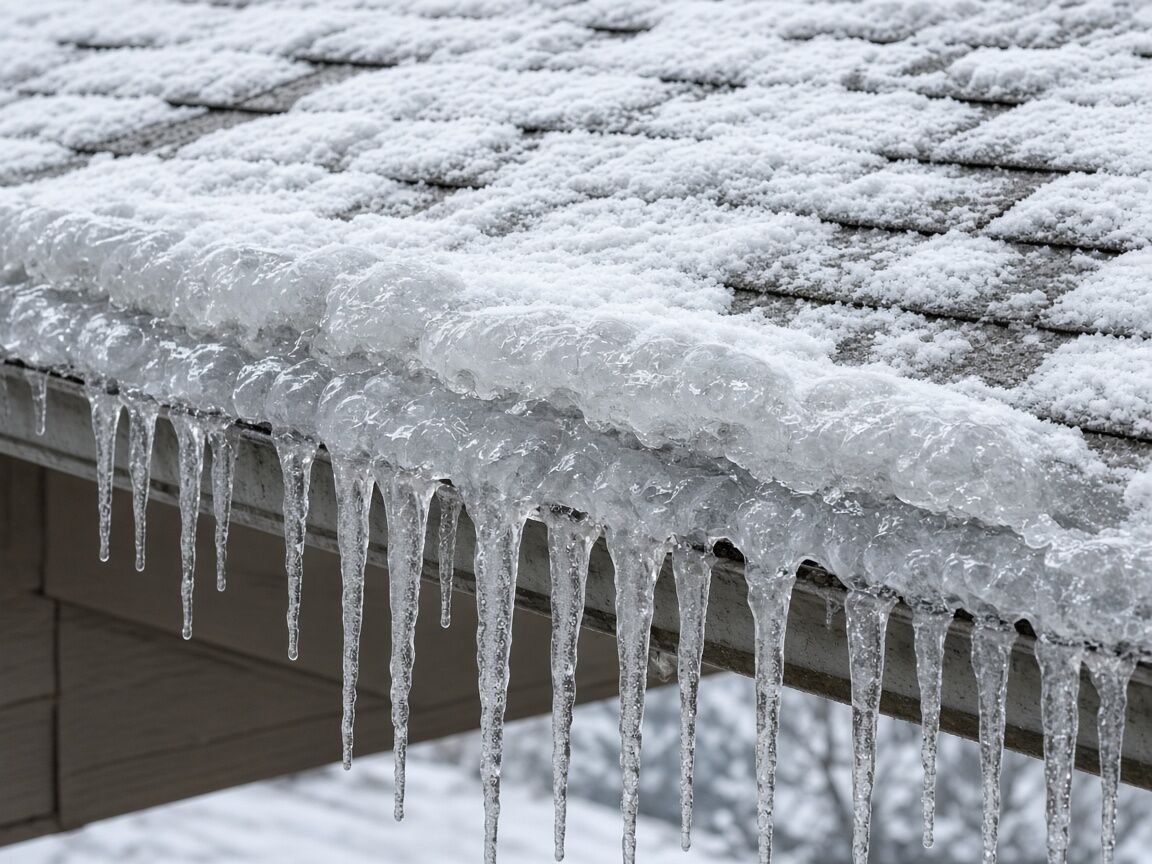
Picture made with AI for this guide.
What causes ice dams on a roof
Three things have to line up: snow on the roof, outdoor air below freezing, and a roof deck above freezing over the heated part of the house. The warm section melts the snow from underneath, the water runs down to the overhang, which sits outside the walls with cold air above and below it, and it freezes there. Every thaw adds another layer.
The heat almost always comes from the house. Warm air leaking into the attic is usually the main culprit, more than heat soaking through the insulation, and it gets in around recessed lights, the attic hatch, plumbing and wiring holes, the chimney chase and the tops of interior walls. Ducts and furnaces in the attic, and bath fans that dump warm, damp air into it, add more.
Some houses are set up for trouble. Story-and-a-half homes with rooms under the roof have kneewalls and sloped ceilings that are hard to insulate, and cathedral ceilings have no attic to vent at all. Low slopes, valleys and spots where an upper roof drains onto a lower one hold snow and water longest. Sun can make icicles on any roof, but big, recurring dams point to heat loss.
Ice dam or just icicles? Signs to look for
Icicles on a gutter are common and not always a problem. A dam is a thick ridge of ice along the eave, sometimes several inches tall, with slush or water trapped on the roof above it. From the ground, icicles hanging from the soffit or forming behind the gutter instead of off its front edge mean water is getting past the roof edge.
Inside, look near outside walls on the top floor. Brown ceiling stains, damp drywall, peeling paint, wet window trim or drips around the top of a window frame after a sunny winter afternoon all point to water backing up under the shingles. In the attic, frost on the nail tips, dark stains on the deck near the eaves and damp, matted insulation show both the leak and the warm, moist air behind it.
The snow on your roof is a map. After a snowfall, look for bare or thin patches on the upper roof while the eaves stay white. Those patches sit over the worst air leaks, and they show where to start sealing.
How to remove an ice dam safely
Stay on the ground when ice is around. A roof rake with a long handle lets you pull fresh snow off the bottom few feet of the roof, which cuts off the supply of meltwater. Choose one with rollers or a plastic blade, don't scrape down to the shingles, and look up for power lines before you raise it.
To open a channel through an existing dam, fill a long sock or one leg of old pantyhose with calcium chloride ice melt, tie it off and lay it across the dam so one end hangs over the gutter. It melts a slot that lets trapped water drain. Skip rock salt, which can harm shingles, gutters, metal flashing and the plants below, and keep any runoff off plantings where you can.
Never chip the ice with a hammer, chisel or shovel; it breaks shingles and gutters and tends to throw people off ladders. For a big dam that is leaking now, some roofing and roof cleaning companies cut the ice away with low-pressure steam, which doesn't harm the shingles. Pressure washers and open flames have no place on a frozen roof.
How to prevent ice dams: air sealing and insulation
Seal first and insulate second, because loose insulation does little to stop air moving through it. From the attic, foam or caulk the holes around wires, plumbing vents and the top plates of walls. Weatherstrip the attic hatch and give it an insulated cover. Replace old recessed lights with airtight, insulation-rated ones, or seal approved covers over them. Close the gap around a chimney with sheet metal and fire-rated sealant, never plain foam, since the chimney gets hot.
Then deal with whatever else heats the attic. Bath and kitchen fans should vent through the roof or a wall to the outdoors, not into the attic. Ducts up there need sealed joints and a thick jacket of insulation. Once the air leaks are closed, adding insulation up to the depth your climate's code calls for pays off fully.
An energy auditor with a blower door and an infrared camera can find leaks you would never spot, and some utilities offer those visits at a reduced price. Insulation and air sealing contractors do this work; a roofer repairs what the water damaged.
Roof ventilation, heat cables and ice barrier
Ventilation is the partner to insulation. Outside air drawn in at the soffits and let out at the ridge washes along the underside of the deck and keeps it close to outdoor temperature, so snow on top doesn't melt from below. Baffles at the eaves hold insulation back so that air has a path. The attic fan guide explains intake and exhaust in more detail.
Heat cables are a patch, not a cure. Laid in a zigzag along the eaves and run through the gutters and downspouts, they keep drainage channels open on problem spots. They draw power all winter, must be a type rated for roofs and gutters, belong on a protected outdoor outlet, and do nothing about the heat leaks behind the dam.
Ice barrier is the backstop. This self-sealing membrane goes under the shingles along the eaves, and where ice dams are a known problem, codes call for it to reach from the roof edge to at least 24 inches inside the exterior wall. It seals around nails, so water held behind a dam has a harder time getting in. It goes on only when the roof is replaced.
Ice dam damage: what to check after the thaw
Water from an ice dam often does its damage out of sight. Once the weather warms, go into the attic and press on the insulation near the eaves. Wet insulation flattens and loses much of its value, so dry it out or replace it rather than leaving it. Check the roof deck for dark, soft or moldy patches.
Inside, keep an eye on stained ceilings and walls near outside corners. Paint that bubbles or drywall that stays soft means water reached the wall cavity, and wet insulation inside an exterior wall can stay damp long enough to grow mold. Look at window and door trim for swelling.
Outside, check the gutters for bends, sagging and hangers pulled loose by the weight of the ice, and the fascia behind them for soft wood. Look over the first few courses of shingles for cracks, lifted edges and scraped granules, especially if anyone chipped at the ice. Photograph everything before repairs begin. A roofer handles the roof and gutters, while the heat-loss work that prevents the next dam belongs to an insulation or air sealing contractor.
Questions people ask
Will an ice dam melt on its own?
Eventually, once temperatures stay above freezing. The risk is what happens before then: every sunny afternoon adds meltwater behind the dam, and every cold night makes it taller. Raking snow off the lower roof and opening a channel limits the damage while you wait.
Should I knock icicles off my gutters?
Only small ones, from the ground, with a long pole while standing well to the side. Big icicles are heavy and fall without warning, and yanking them can pull the gutter off its hangers. Never stand under them.
Do gutters cause ice dams?
No. Ice dams form on the roof itself, from heat escaping the attic, and they form on houses with no gutters at all. Gutters full of ice do add weight at the eave and can bend or pull loose, so check them each spring.
Do heat cables prevent ice dams?
They keep channels open where they are laid, which can stop a leak at a problem spot. They don't change the heat leaving the attic, they cost money to run, and a dam can still form above or beside them. Treat them as a stopgap.
Roofers near you
Papalocal lists 57,657 roofers. Search them by town.
Related guides
All roofing guides
Your business? Claim it free