
Attic Fan Installation
RRoofpedia guide2,035 words · 9 min read
Free tool
Compare roofing quotesPrice per square, side by side, and what each quote leaves out.An attic fan goes into an opening cut near the ridge or in a gable wall, sealed with flashing or framed in, and is powered from a house circuit or its own solar panel, usually switched on by a thermostat. It only helps when the soffits let in enough outside air, and it can work against a ridge vent on the same roof.
"What's All The Buzz?"
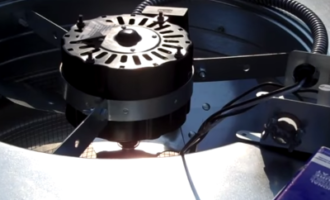
It is summer time, the weather is hot, you're sweating and you're wondering why all of your neighbor's roofs are buzzing. "What is that gentle humming noise coming from above?"
What you're hearing is the sound of an efficient home cooling system!
Before you go to the nearest home improvement store, and/or call your trusted trades provider to have one installed on your home,read further to see what our pro's have been saying about attic fan installation.
Comfort, Cost And Quality
Care About Comfort?
Increasing the comfort level in a home is one of the largest reasons that people choose to invest in an attic fan for their home. Just spend one moment in your attic during the summer and you can expect to experience
- -unbearable heat
- -suffocating air
- -stale/stagnant environment
In some parts of the country, and under certain circumstances, you can add humidity and mold to that list of unpleasantries.
With high levels of trapped heat and air, attics can become a steamy cesspool that increase energy costs. Heat will radiate through attic floors, home ceilings and into your living space. All of this translates into higher energy costs to keep your home at a comfortable temperature.
Hear what an expert has to say on the topic. Duane from E.M. Blue Roofing in Atlanta has more experience than most in diagnosing roof problems. With nearly 40 years in the industry, and an emphasis on skilled roof repair, he has crawled through all types of attics in search of leak sources.
“If you aren’t using your attic fan, you’re missing a huge opportunity to keep your house cool. Most people never set foot in their attic… For a good reason. They are HOT! Worse yet, people think their attic fans are functioning properly when in actuality, they haven’t worked for years.”
Longer Roof Lifespan
Duane addresses another very important benefit that attic fans have in respect to asphalt shingles. “Shingles are tough, but when exposed to excessive heat for extended periods of time, the lifespan decreases dramatically.”
Keeping an attic cool will have the added benefit of prolonging the lifespan of your roof. With roofs being such a vital element of protection for your home, and a costly investment, it is worth doing everything possible to keep it in tip top shape. Sufficiently cooling an attic with an attic fan, homeowners have the potential to save $1,000’s in longer roof life expectancy and fewer roof repairs.
Asphalt shingles that have been exposed to excessively high temperatures will have the appearance of curling edges and will be more brittle in texture.
Venting Options
Attic fans are very efficient, but they aren’t the only option. Many other roof products have been designed to allow heat to escape from attic spaces. Some of the most common ones that are seen on houses today are ridge vents, roof vents and air vents.
Each of these function using the heat gradient that is generated by the hot sun heating up the air in your attic. As the hot air rises, it will find its way out through the vents in a passive manner. No additional energy is spent in removing this hot air through passive ridge and roof vents. Soffits are vented to allow for cooler air in the shade of your roof to enter your attic and replace the hot air that is flowing out.
There is also an air vent that has the appearance of an upside down egg beater. Some people call them a “whirlybird” or a “chef’s hat.” This unit also acts from the passive motion of air following upward following a temperature gradient. With a turbine/egg beater appearance, it will spin and gain momentum which increases air flow. These units also spin in windy environments.
Power Vent Attic Fan
For those who don’t want to take a passive vent approach to moving air and cooling their attics, a power vent is the solution. They are commonly installed on the sloped portion of a roof. For greatest efficiency and to comply with the manufacturer’s suggestion, it is preferable to install them near the ridge, or highest point on the roof.
The gabled portion of a wall is another option for your attic fan installation. A roof gable is the triangular appearing shape at the top of a roof peak. Power vents installed on gables are usually covered by a protective grate that keeps them hidden from view.
Whether installed on your roof, or on your gable, the attic fan will need a source of power. This is when it is best to contact a professional who is licensed, skilled and experienced with attic fan installation. John Newman is an Electrician in Manassas, Virginia who is accustomed to helping homeowners cool down their attics with a professionally installed attic fan. John says “Attic fans are great, but they need to be checked frequently. Since they are so quiet, and located high on your roof, it is hard to know if they are operating or not. A local electrician is able to quickly verify if your unit is operating up to par.” Additionally John says “Here in Virginia, we have a high level of humidity. I am a big advocate of attic fans that have humidity sensors that power up the unit when high levels of moisture are detected.
Keep Your Attic Cool
If you’re looking to beat the summer heat and keep your home/roof protected, then consider installing an attic fan. The benefits are both immediate and long-lasting.
Solar attic fans vs wired attic fans
A solar attic fan carries its own small solar panel, either built onto the fan housing or mounted nearby on a sunnier slope. Because it does not connect to the house wiring, there is no circuit to run, usually no electrician needed, and nothing added to the power bill. It spins fastest when the sun is strongest, which is exactly when the attic is hottest.
The trade-offs come from the same panel. A solar fan slows on cloudy days and stops at night, so it cannot clear moisture after dark the way a wired fan with a humidity control can. Many solar models move less air than a wired fan of similar size. Some come with a thermostat or an option to plug into house power as a backup.
Either kind still needs a properly flashed opening in the roof, and either kind depends on soffit intake to pull outside air in. Before choosing, check whether your roof already has a ridge vent, how much intake the eaves provide, and whether your town requires a permit for a new roof opening or a new electrical connection.
How attic ventilation works: intake and exhaust
Attic ventilation is a loop. Cooler outside air comes in low, through vents in the soffits or at the eaves, sweeps up the underside of the roof deck, and leaves high, through a ridge vent, roof vents, gable vents or a fan. In summer that loop carries heat out. In winter it carries out the moisture that rises from the house, which would otherwise condense on the cold roof deck.
Building codes based on the model residential code generally ask for one square foot of net free vent area for every 150 square feet of attic floor, and allow half that in some cases, such as when the vents are split between high and low on the roof. Vent makers print the net free area on each product, so the math can be checked. Your local code is the one that applies.
Balance matters as much as the total. Most vent makers want at least as much intake as exhaust. An attic with plenty of exhaust and almost no soffit intake will pull air from wherever it can, including from the house through gaps around ceiling lights and the attic hatch.
Ridge vents and soffit vents
A ridge vent is a slot cut along the peak of the roof, covered by a low vented cap that is shingled over to match. Hot air leaves along the whole length of the ridge, there are no moving parts, and from the street it is nearly invisible. It needs enough ridge length to do the job, and it works only with matching intake below.
That intake usually comes from soffit vents: perforated vinyl or aluminum soffit panels, continuous strip vents, or individual round or rectangular vents set into wood soffits. Over time, soffit vents get blocked by paint, by insulation blown into the eaves, or by debris and nests. Plastic or foam baffles fastened between the rafters keep a channel open above the insulation so air can reach the roof deck.
If a ridge vent was added but the attic still bakes, look at the soffits first. Pull down a soffit panel or look from inside the attic toward the eaves; if insulation is packed tight against the roof deck and no daylight shows, the ridge vent has nothing to draw from.
Can you use an attic fan with a ridge vent?
Many shingle and vent makers advise against it. A powered fan pulls air from the nearest opening it can find. With a ridge vent a few feet away, that opening is the ridge vent itself, so the fan draws outside air in through the ridge and blows it straight back out, while the hot air lower in the attic and the soffit intake sit idle. Wind-driven rain can be pulled in through the ridge vent as well.
Gable vents cause a similar short circuit with a roof-mounted fan. The rule many roofers follow is one type of exhaust per attic, fed by intake low on the roof. If a house already has a ridge vent, a fan is rarely needed; if the attic still runs hot, more intake usually fixes it.
A powered fan with too little intake has a second problem. It lowers the air pressure in the attic and pulls air up from the living space through gaps around lights, wiring and the attic hatch, taking the air you paid to cool along with it. In a house with a gas furnace or water heater in the attic, that pressure drop can also pull exhaust back down the flue, so have the whole setup checked.
Questions people ask
Are solar attic fans worth it?
They help most in hot, sunny places where the attic has enough soffit intake and no ridge vent. They cost nothing to run but stop at night and slow in cloud. On a roof that already has a working ridge vent with good intake, a fan of any kind adds little.
How many soffit vents do I need?
Enough to give at least as much net free intake area as the exhaust at the top of the roof. Add up the net free area printed on the ridge or roof vents, then choose soffit vents whose total matches or exceeds it. Your local code sets the minimum for the attic's size.
Do I need an attic fan if I have a ridge vent?
Usually not. A ridge vent fed by open soffit vents moves air on its own, and adding a fan nearby can short-circuit it. If the attic still runs hot, make sure the soffits are open and the insulation is not blocking them before adding anything powered.
Does an attic fan need a permit?
It depends on where you live. A new hole in the roof and a new electrical connection can each require a permit, while a solar fan may not. Call your local building department before installing, and ask the installer who pulls the permit.
This guide was updated in October 2026 with new sections and the questions people ask most.
Roofers near you
Papalocal lists 57,668 roofers. Search them by town.
Related guides
 New: Roof Inspection: A Complete Homeowner's Guide
 New: Ice Dams: Why They Leak and How to Stop Them
 The Top 5 Things You Need To KNOW About Your Roof
 Common Roof Leaks. Reasons Why Your Roof May Leak…
 Metal Roof Installation: What You Need to Know
Your business? Claim it free