
Chimney Servicing: What It Is and How to Stay Safe
RRoofpedia guidePublished November 28, 20261,326 words · 6 min read
Free tool
Compare roofing quotesPrice per square, side by side, and what each quote leaves out.Chimney servicing combines sweeping the flue, inspecting the structure and liner, and testing for safe combustion. NFPA 211 calls for at least one inspection every year, even if the fireplace barely gets used. Skipping it lets creosote, moisture and debris build up quietly until something goes wrong.
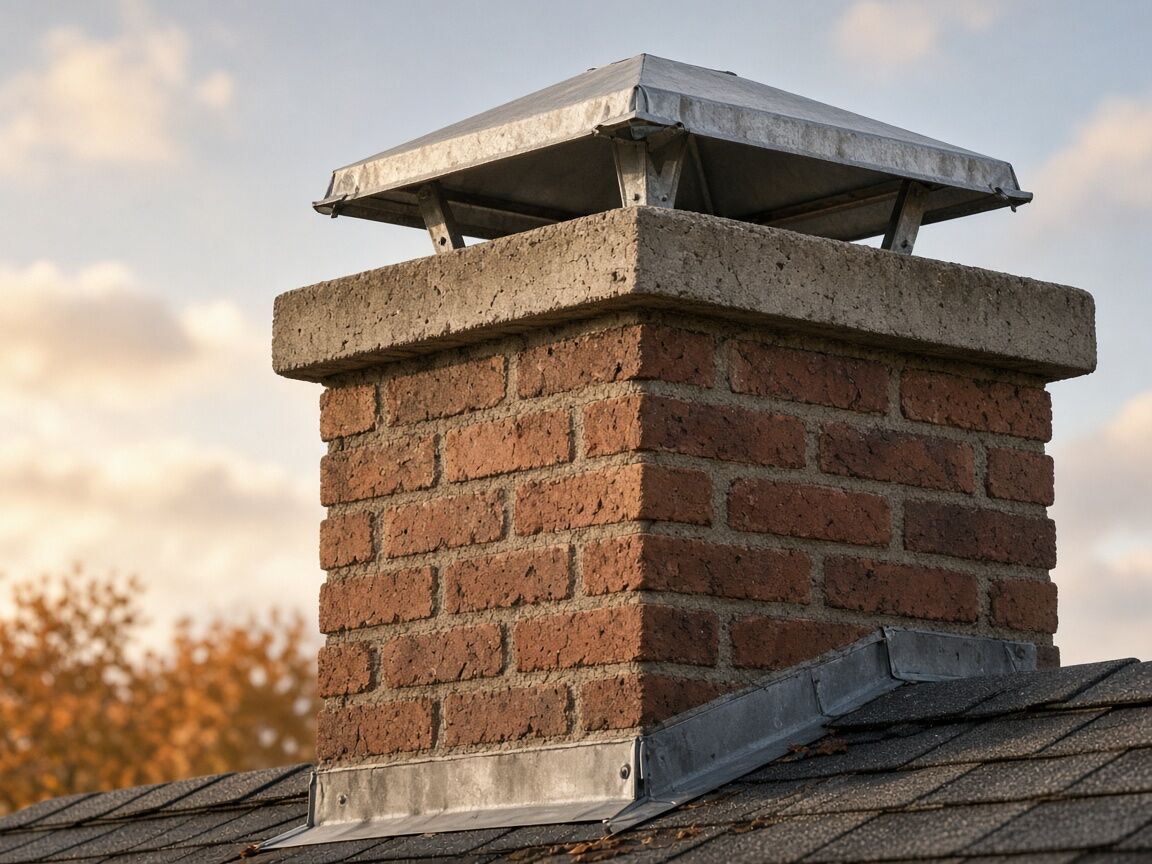
Picture made with AI for this guide.
What chimney servicing actually covers
Servicing is not just a quick brush-out. It is a structured process that looks at the flue, the chimney structure itself, the connected appliance, and the conditions needed for combustion to happen safely. Those four things are connected: a clean flue does not help much if the liner is cracked or the cap is letting water in.
Sweeping and inspection are two distinct services, even though a sweep often performs both in one visit. Sweeping removes soot, ash, tar and creosote deposits that restrict smoke passage and raise fire risk. Inspection evaluates the liner, joints, clearances and exterior masonry to catch damage that cleaning alone would miss. A safety check may also cover ventilation adequacy and the condition of the connected appliance. Booking one service without the other leaves real gaps in what gets caught.
Why creosote is the number-one concern
Creosote is the condensed byproduct of wood smoke. It clings to the flue wall and hardens over time into a tar-like or glazed crust. This Old House notes that chimney fires fed by creosote can reach temperatures up to 2,000°F — hot enough to crack a liner or ignite framing inside the wall.
CSIA and NFPA 211 guidance says sweeping is needed when creosote accumulation reaches 1/8 inch or when any glazed creosote is present. You cannot judge that by eye from the firebox. A sweep uses rods, brushes and a light to measure what is actually there.
Regular sweeping and inspection is the single most effective way to prevent a chimney fire, according to the Chimspector Safety Center. That is the whole case for annual servicing in one sentence.
The three inspection levels and when each applies
NFPA 211 defines three inspection levels, and knowing which one you need saves time and money. Level 1 is the routine annual visual check of all accessible areas — the right choice when nothing has changed and the appliance has been running normally. Level 2 adds video scanning of the flue interior and is required before a home sale, after a fuel-type change, or following any event like a chimney fire or a severe storm. Level 3 is invasive, involving removal of components to reach concealed areas, and is reserved for suspected hidden hazards.
NFPA 211 requires chimneys, fireplaces and vents to be inspected at least once a year regardless of how often the fireplace is used. The 2024 edition of NFPA 211 revised Chapter 15 to make inspection requirements more applicable across fireplaces, vents and solid fuel appliances.
How often should you schedule a sweep?
Annual inspection is the floor, not the ceiling. How often you sweep depends on what you burn and how much. The Scottish Fire and Rescue Service recommends sweeping a wood-burning flue quarterly while it is in active use, twice yearly for bituminous coal or peat, and at least annually for smokeless coal.
One common mistake is skipping the annual inspection because the fireplace sits unused most of the year. An idle chimney is not a safe chimney. Animal nesting, moisture infiltration and structural settling can all compromise the flue without a single fire being lit. The inspection catches those problems before they become emergencies.
If you have a flexible stainless-steel liner, it needs careful sweeping and a check for corrosion or distortion. Rigid liners need joint security verified. The liner type changes what the sweep looks for, so mention it when you book.
What a professional sweep checks on the outside
The exterior of the chimney tells its own story. During a service visit, a sweep or inspector checks the chimney cap condition, crown integrity, flashing and mortar joints. Each of those is a potential water entry point. A failed cap lets rain, debris and animals straight into the flue. Cracked crown mortar lets water freeze and expand, widening the crack with every cold night. Flashing failure is one of the most common sources of roof leaks near chimneys.
Professional sweeps bring HEPA vacuums and containment systems so that dislodged soot and debris do not travel into the living space. That equipment matters — a shop vac and a hardware-store brush will not do the same job and can push fine particles through gaps in the firebox.
DIY cleaning versus calling a certified sweep
Homeowners can clear light ash from the firebox and keep the area around the hearth clean. That is the sensible limit. DIY chimney cleaning risks incomplete deposit removal, missed structural damage, falls from the roof and direct exposure to fine soot and creosote particles. None of those risks are worth taking on to save a service fee.
If smoke enters the room when you light a fire, if you can see visible damage inside the firebox, or if you suspect any structural issue, stop using the fireplace immediately and call a professional before the next fire. The Federation of Master Builders is direct on this point: do not use the fireplace until it has been professionally assessed. A chimney fire or carbon monoxide event does not give a warning before it happens.
Keeping up between service visits
A few habits extend the time between problems. Burn only dry, seasoned hardwood — wet wood produces far more creosote than wood dried for at least a season. Keep the damper fully open when a fire is burning so combustion gases draw cleanly up the flue. After each fire, let ash cool completely before removing it, and leave a thin layer in the firebox to insulate the next fire.
Check the chimney cap from the ground after any major storm. A displaced or damaged cap is easy to spot and easy to replace before water or animals get in. Note any white staining on the exterior masonry — that efflorescence signals moisture moving through the brick and is worth mentioning at the next service visit. Small observations between annual visits help the sweep understand what the flue has been through.
Questions people ask
How often does a chimney need to be serviced?
NFPA 211 requires at least one inspection per year regardless of use. Sweeping frequency depends on fuel type and how often you burn. The Scottish Fire and Rescue Service recommends quarterly sweeping for active wood fires.
What is the difference between chimney sweeping and a chimney inspection?
Sweeping removes soot, ash and creosote deposits from the flue. Inspection evaluates the liner, structure, joints and clearances for damage. They are separate services, though a certified sweep often performs both during the same visit.
Can I clean my own chimney instead of hiring a sweep?
DIY cleaning risks incomplete deposit removal, missed structural damage, falls and soot exposure. Professionals use HEPA vacuums and containment systems that keep debris out of the home. For anything beyond clearing firebox ash, call a certified sweep.
What triggers a Level 2 chimney inspection?
NFPA 211 requires a Level 2 inspection before a home sale, after changing fuel type, or following any event such as a chimney fire or severe storm. It adds video scanning of the flue interior to the standard visual check.
Is chimney servicing necessary if I rarely use the fireplace?
Yes. An unused chimney can still accumulate animal nests, moisture and debris. NFPA 211 requires annual inspection regardless of usage, and those hazards can compromise the flue without a single fire being lit.
When should I stop using the fireplace and call a pro immediately?
Stop if smoke enters the room, if you see visible damage inside the firebox, or if you suspect any structural problem. Do not light another fire until a professional has assessed and cleared the installation.
Read: Chimney Leaks and Chimney Flashing
Read: Stainless Steel Chimney Cap: What Every Homeowner Should Know
Roofers near you
Papalocal lists 57,696 roofers. Search them by town.
Related guides
 Stainless Steel Chimney Cap: What Every Homeowner Should Know
 Chimney Leaks and Chimney Flashing
 Gable Vents: A Complete Homeowner's Guide
Your business? Claim it free