
Gable Vents: A Complete Homeowner's Guide
RRoofpedia guidePublished November 26, 20261,449 words · 6 min read
Free tool
Compare roofing quotesPrice per square, side by side, and what each quote leaves out.A gable vent is a louvered, screened opening cut into the triangular end wall of your attic near the peak. It lets hot, humid air escape and cooler outside air enter. Getting the type and size right matters as much as the vent itself.
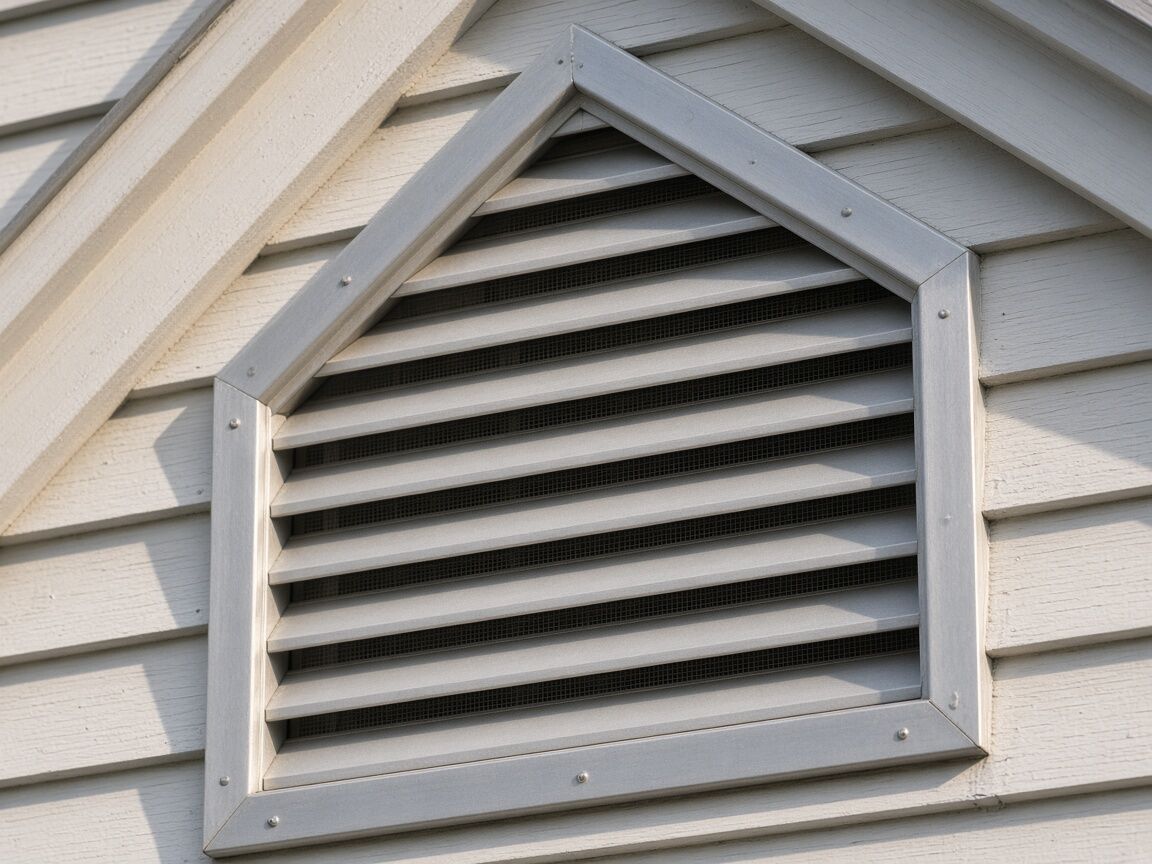
Picture made with AI for this guide.
What a gable vent is and what it does
The gable end is the triangular wall you see on each side of a pitched roof. A gable vent sits near the top of that wall, where heat naturally collects. Angled louvers shed rain while an insect screen keeps pests out.
Gable vents are the oldest form of attic ventilation. On many older homes they are the only ventilation present. That heritage matters because it explains why so many houses still have them and why contractors still install them today.
The job of any attic vent is to move air. Heat and moisture build up in an attic year-round. In summer, trapped heat drives up cooling loads. In winter, warm moist air rising from living spaces can condense on cold sheathing and rot it. A gable vent gives that air somewhere to go.
How gable vents actually work
A pair of gable vents on opposing walls works on passive wind pressure. Wind pushes against one vent, raises the pressure inside slightly, and air exits through the vent on the other side. That cross-ventilation effect moves air without any motor.
Gable vents also work alongside lower intake vents. Soffit vents draw cooler air in at the eaves; the gable vent exhausts warm air near the peak. The temperature difference between low and high creates a natural stack effect that keeps air moving even on calm days.
One important conflict: if your house already has a ridge vent running along the roof peak, a gable vent can short-circuit it. Instead of drawing intake air up from the soffits, the ridge vent pulls it sideways from the gable opening. That defeats the soffit-to-ridge airflow path the ridge vent depends on. Updated 2026 guidance from roofing sources is clear on this point — seal existing gable vents when a ridge vent is added.
Types of gable vents and how they differ
Static louvered vents are the standard choice. They have no moving parts beyond the louvers and screen. Aluminum holds up well with little upkeep. Vinyl costs less but can become brittle over time. Wood fits historic homes but needs periodic painting to stay sound.
Powered gable vents add an electric or solar fan behind the louvers. A thermostat, a humidistat, or both control the fan so it runs only when attic conditions call for it. They move more air than a static vent can, which helps in climates where passive cross-ventilation is weak. The trade-off is a power source, a control device, and more parts that can eventually fail.
Decorative gable vents look like the real thing from the street but have a solid back. They provide no airflow at all. They are an aesthetic choice, not a ventilation solution. Confirm what you are buying before assuming a vent actually vents.
How to size a gable vent correctly
Size is measured in net free ventilating area, or NFA — the actual open space air can pass through after louvers and screen reduce the gross opening. The IRC at section R806.2 sets a baseline of 1/150 of the attic floor area in NFA. That ratio can drop to 1/300 when a substantial share of the required venting sits high in the attic, at least three feet above the eave vents, rather than spread evenly at low and high positions.
A square is 100 square feet. An attic floor of 1,200 square feet needs at least 8 square feet of NFA at the 1/150 ratio. Manufacturers publish NFA for each vent size, so the math is straightforward once you know your attic area.
Local codes can be stricter than the IRC. Wildfire zones add their own requirements on top of ventilation math. Always check with your local building department before ordering.
Choosing the right gable vent for your house
Start with the ventilation system already in place. If you have soffit vents and no ridge vent, a static gable vent on each end works well. If a ridge vent is present or planned, a gable vent is likely to do more harm than good unless it is sealed.
Material follows climate and budget. Aluminum handles coastal salt air and freeze-thaw cycles without complaint. Vinyl suits mild climates where UV degradation is slower. Wood suits historic or craftsman homes where appearance matters and the owner is willing to maintain it.
In a high fire hazard zone, material choice is not optional. California's building code, effective January 1, 2026, consolidates wildland-urban interface vent requirements into Title 24 Part 7. Gable vents in those zones must be tested and listed to ASTM E2886. Products described as V2 two-stage ember-resistant gable vents carry that listing along with a one-hour fire rating. If your county maps your lot in a high fire hazard severity zone, only listed products satisfy the code.
Installing a gable vent: what the job involves
Proper installation starts with an accurate rough opening cut to the manufacturer's specified dimensions — not guessed. The vent frame needs continuous perimeter caulking and flashing so water cannot track behind the siding. Insulation inside the attic must be kept clear of the vent opening or the airflow path is blocked before it begins.
Common mistakes include undersizing the vent, skipping flashing, cutting the opening off-dimension, and ignoring local code requirements. Any one of those errors can mean water damage or a failed inspection.
Cutting through an exterior wall near the roof peak means working on a ladder at height. Ladder stability, safety glasses, and gloves are the minimum. Before cutting, check for hidden wiring or pipes in the wall cavity. That step is easy to skip and costly to regret. If you are not comfortable at that height or unsure what is inside the wall, this is a job for a licensed contractor.
Keeping a gable vent working year after year
Once a year, look at each vent from inside the attic and from outside. Check the screen for tears, holes, or debris packed against it. A clogged screen cuts NFA and invites pests once the screen fails. Look at the frame edge where it meets the siding — caulk shrinks and cracks over time, and a gap there is a water entry point.
Check fasteners for rust or looseness. On aluminum and vinyl vents, look for physical damage from hail or wind-driven debris. On wood vents, check for paint failure and soft spots that signal rot.
Powered vents need one more step: confirm the fan runs when the thermostat calls for it and that the humidistat, if present, is set correctly. A fan that runs constantly wastes energy; one that never runs defeats the purpose. If the motor sounds rough or the blades wobble, replace the unit rather than patch it.
Questions people ask
Can I have both a gable vent and a ridge vent?
Generally no. A gable vent short-circuits a ridge vent by pulling air sideways from the gable opening instead of up from the soffits. Most roofers seal existing gable vents when a ridge vent is added so the soffit-to-ridge airflow path works as designed.
How do I know what size gable vent I need?
Measure your attic floor area in square feet. The IRC requires at least 1/150 of that area in net free ventilating area. Each vent's NFA is listed on the product spec sheet. Add up the NFA of all vents to confirm you meet the minimum before buying.
Do gable vents let rain or snow inside?
Angled louvers shed most rain. In severe driving rain or wind-blown snow, some moisture can enter. Proper flashing and caulking at the frame edge keep water from tracking behind the siding. If you see staining inside the attic near a vent, check the caulk line first.
Are special gable vents required in wildfire areas?
Yes. California's code effective January 1, 2026 requires gable vents in high fire hazard severity zones to be tested and listed to ASTM E2886. Check your local fire hazard zone map and building department before purchasing any vent for those locations.
Should I use a powered gable vent or a static one?
A static vent works well when wind provides reliable cross-ventilation and the attic area is not unusually large. A powered vent helps when passive airflow is weak, the attic runs very hot, or humidity is a persistent problem. The fan adds parts that need occasional maintenance.
Roofers near you
Papalocal lists 57,692 roofers. Search them by town.
Related guides
 Roof Inspection: A Complete Homeowner's Guide
 Attic Fan Installation
 The Top 5 Things You Need To KNOW About Your Roof
Your business? Claim it free