
Chimney Leaks and Chimney Flashing
RRoofpedia guidePublished November 4, 20261,434 words · 6 min read
Free tool
Compare roofing quotesPrice per square, side by side, and what each quote leaves out.Most chimney leaks come from the flashing where the roof meets the brick, but rain also gets in through a cracked crown, porous brick and mortar, a rusted chase cover or an uncapped flue. Find which one before paying for a repair: flashing that is only caulked fails again, while step flashing and counterflashing set into the mortar can outlast the shingles around it.
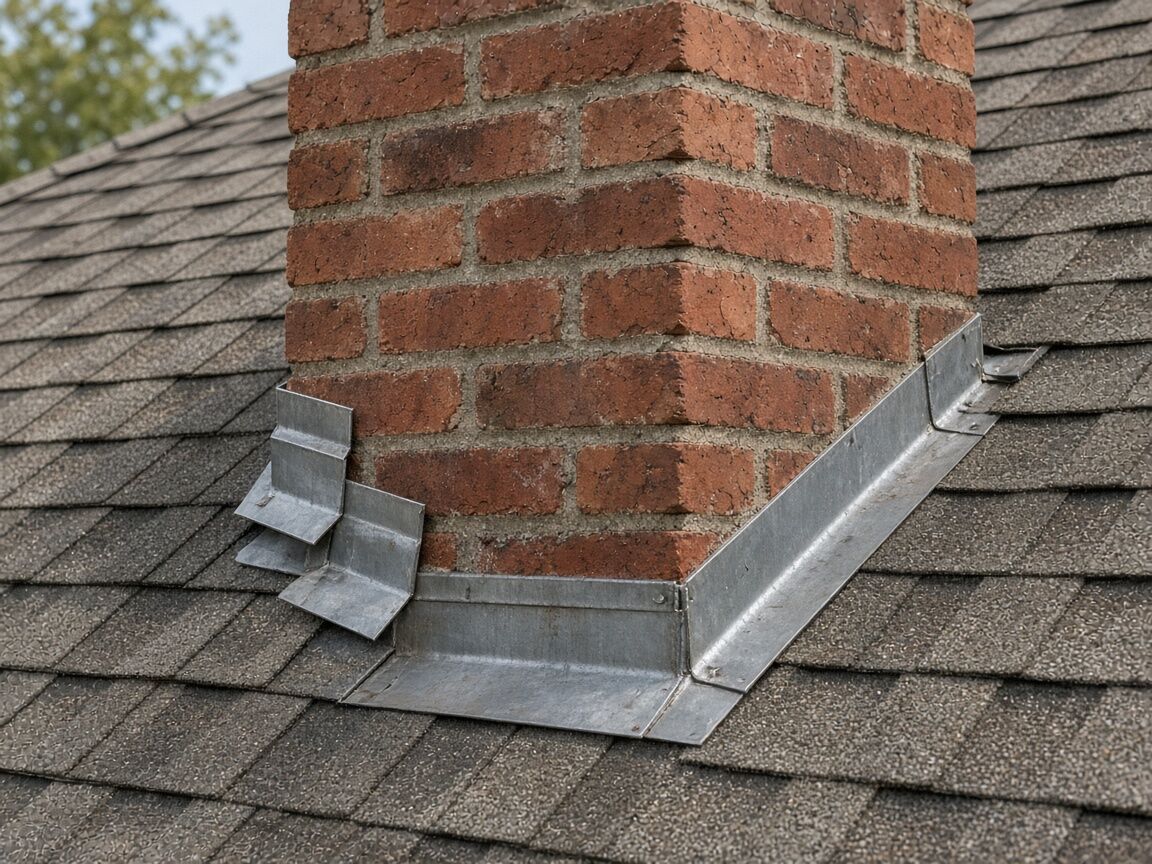
Picture made with AI for this guide.
How chimney flashing is built
Proper chimney flashing is two layers that overlap but aren't fastened to each other. The base layer belongs to the roof. On the downhill face, an apron flashing lies over the shingles and turns up the brick. Up each side, step flashing goes in one L-shaped piece per course of shingles, each piece tucked under the shingle above and nailed to the deck only, never to the brick. On the uphill side, a back pan or a cricket carries water around the chimney.
The top layer belongs to the chimney. Counterflashing is set into a groove cut about an inch deep into a mortar joint, sealed there, and bent down over the base flashing. Water running down the brick lands on it and is turned out over the step flashing below.
The two layers can slide past each other, which matters because the chimney stands on its own foundation while the house framing shrinks and settles around it. Flashing nailed or glued to both tears itself apart. Copper, lead, galvanized and painted steel are common choices; bare aluminum doesn't belong against mortar, because wet mortar corrodes it.
Chimney leaking when it rains: finding the source
Where the water shows inside is your first clue. A stain on the ceiling or wall right beside the chimney usually points to flashing. Water in the firebox, a rusted damper or drips down the flue point higher up, to the crown, the cap or the brick above the roof. White, powdery deposits on the brick in the attic or on the chimney breast mean water is soaking through the masonry itself.
A hose test narrows it down, and a roofer can run one for you. On a dry day, one person waits in the attic or by the fireplace with a flashlight while another runs a garden hose on gentle spray. Start low, at the apron, and wet that one area for a good while before moving up to the sides, then the back, then the brick and the crown. Working from the bottom up keeps water from a higher spot from being blamed on a lower one.
Note when it leaks, too. A chimney that drips only when wind comes from one direction is often taking water through the brick or the flashing on that face.
Chimney leaks that don't come from the roof
Not every wet chimney has a rain leak. Gas furnaces and water heaters vented into an old masonry chimney can soak it from the inside. Their exhaust is full of water vapor, and in a large, cold, unlined flue it condenses on the way up, leaving damp spots, white streaks and crumbling mortar even in dry weather. The fix is a liner sized to the appliance, installed by a chimney professional, not new flashing.
Many newer homes have a wood-framed chimney chase sided to match the house, with a metal chase cover on top. Those covers are often nearly flat, so water sits on them, and once they rust through it runs straight down inside the chase. A sloped stainless or aluminum replacement cover is the repair.
Masonry chimneys also drink water through the brick and mortar. Old joints that have cracked or washed out wick rain inward, and bricks whose faces have flaked off from freeze and thaw absorb more. Repointing those joints, repairing the crown and adding a cap over an open flue keep the masonry dry.
Chimney flashing repair: reseal, re-flash or add a cricket
Resealing is the smallest repair. If the counterflashing has pulled out of its groove or the sealant has cracked, cleaning the joint and resealing it with a sealant made for masonry and metal can stop the leak. Thick globs of roofing tar smeared over the whole joint are another matter; they hide the problem and crack again with the next hot summer.
Re-flashing means removing the shingles around the chimney, laying new apron and step flashing, cutting a fresh groove for new counterflashing and reshingling. It is the lasting repair when the old metal is rusted, missing or was never woven in properly, and it costs least done with a new roof, when the shingles are coming off anyway.
Wide chimneys get a cricket, a small peaked roof framed on the uphill side so water and debris split around the chimney instead of piling against it. Code calls for one behind chimneys more than 30 inches wide, and adding one cures a whole class of back-side leaks. On stone chimneys with no straight mortar line, counterflashing is often fastened to the face with a sealed metal bar, which works but needs its sealant checked regularly.
Chimney repair: who to call and what moves the price
Chimney repair is split between two trades. A roofer handles the flashing, the cricket and the shingles around the chimney. A chimney sweep or mason handles the crown, cap, flue liner, repointing and brickwork. Some companies do both; if yours does only one, make sure the other part isn't skipped because it falls outside their trade. Loose or crumbling masonry has to be fixed before new flashing goes in, since counterflashing can't hold in a joint that is falling apart.
The price follows a few things. A tall chimney on a steep, high roof needs more safety gear and staging. A wide chimney takes more flashing and may need a cricket framed and covered. Copper costs more than galvanized or painted steel. Old shingles around the chimney may break when lifted, and a matching color can be hard to find. Masonry work, a liner or a chase cover each add their own line.
Get three written quotes that name each part: which flashing pieces are replaced, the metal, whether the counterflashing is set into the mortar, and what masonry work is included.
Waterproofing chimney brick and mortar
Brick and mortar are porous by nature, and some water soaking in is normal as long as it can dry out again. That is why the coating matters. A breathable water repellent, usually a silane or siloxane product made for masonry, soaks in and makes the surface shed rain while still letting vapor escape from inside. Paint and film-forming sealers trap moisture in the brick, and when that water freezes it pops the faces off.
A repellent is the last step, not the first. Cracked or washed-out mortar has to be repointed and the crown repaired before anything is applied, because a repellent closes fine pores, not open joints. Apply it to a dry chimney so the brick can absorb it.
If the chimney still takes water once the flashing, crown and joints are sound, the brick may be too soft or too far gone, and a chimney mason can tell you whether rebuilding the top above the roofline is the cheaper long-term answer.
Questions people ask
Why does my chimney leak only in heavy rain?
Heavy, wind-driven rain reaches places a light shower doesn't: the uphill side of a wide chimney with no cricket, worn mortar joints on the windward face and gaps at the top of the counterflashing. Note which way the wind blows when it leaks to narrow the search.
Can you fix chimney flashing with caulk?
Only a small gap in otherwise sound flashing. Caulk or roofing tar smeared over missing or rusted flashing is a stopgap that dries, cracks and leaks again. A lasting fix needs real step flashing and counterflashing set into the mortar.
Should chimney flashing be replaced with a new roof?
Usually, yes. Step flashing is woven into the shingles, so the cleanest time to replace it is while the shingles are off. Reusing old, rusty flashing under brand-new shingles is a common shortcut, so ask what each quote does at the chimney.
What is the white powder on my chimney bricks?
It is efflorescence, salts left behind when water moving through the masonry evaporates at the surface. It does no harm by itself and brushes off when dry, but it shows water is getting into the brick, so find where it comes from.
Roofers near you
Papalocal lists 57,657 roofers. Search them by town.
Related guides
 Ice Dams: Why They Leak and How to Stop Them
 Metal Roofs: Types, Cost and Metal vs Shingles
 Zinc and Copper Strips for Moss
Your business? Claim it free