
Asphalt Shingle Roof: What Every Homeowner Should Know
RRoofpedia guidePublished November 6, 20261,448 words · 6 min read
Free tool
Try a new roof on your housePick shingle colors on a house in the house designer, with siding, trim and gutters to match.An asphalt shingle roof is the most common roofing system in the U.S., built from layered components that work together to shed water and protect the structure below. Shingles come in several styles, each with different durability and appearance trade-offs. Knowing how the system works helps you spot problems early and ask the right questions when hiring a contractor.
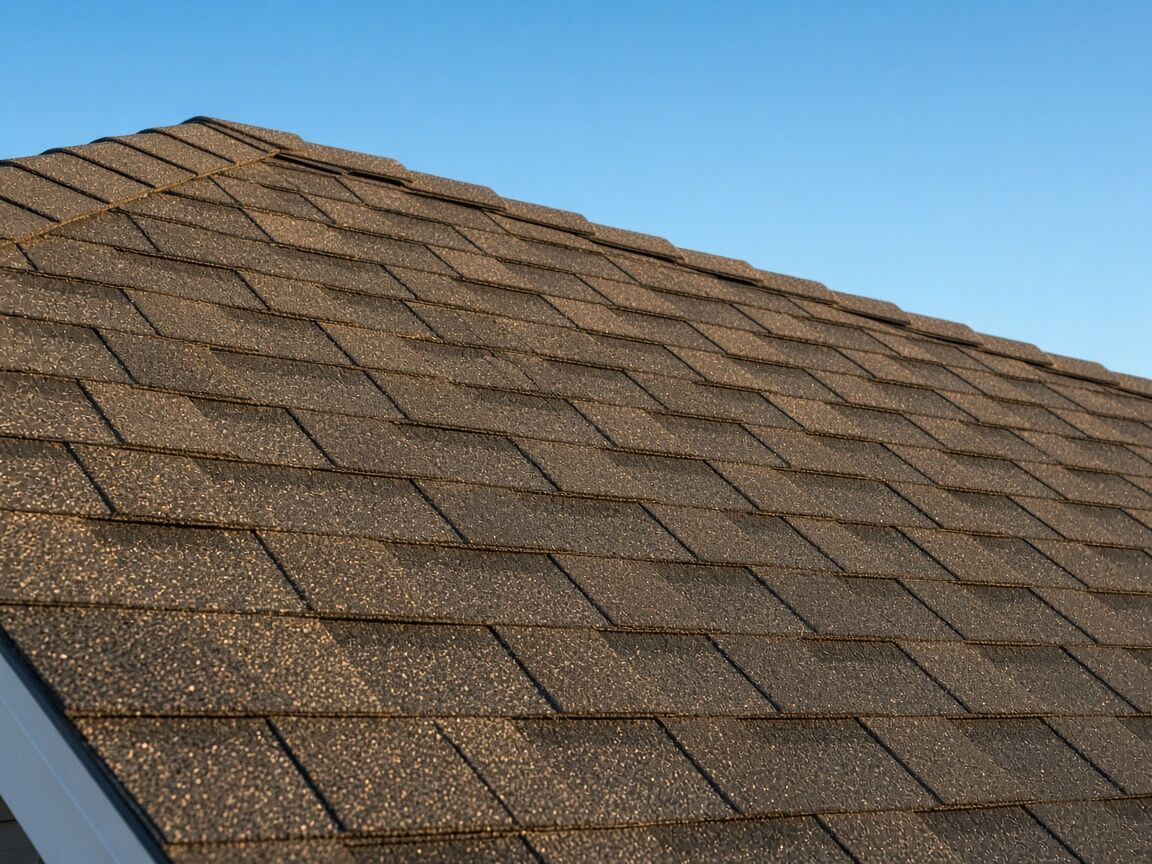
Picture made with AI for this guide.
What is an asphalt shingle and how is it made?
An asphalt shingle starts with a mat — either fiberglass or organic — coated on both sides with asphalt compounds. The weather-facing side is then embedded with mineral granules. The National Roof Authority notes those granules do three jobs: block UV radiation, contribute to fire resistance, and give the shingle its color.
Fiberglass mats are lighter and carry better fire ratings. Organic mats, now largely out of production, were heavier felt-based sheets. The granules you see on a new shingle are bonded tightly; when they start showing up in gutters in quantity, the shingle is aging.
In December 2025, ASTM International revised standards D3462 and D3018 to allow pre-consumer, post-consumer, and recycled materials in asphalt shingles, provided every performance requirement is still met. That opens the door to greener shingle options without sacrificing the specs that matter.
How the full roof system works together
A shingle roof is not just shingles. The system starts at the deck — the plywood or OSB base — and builds up in layers. Underlayment goes on first as a secondary moisture barrier, with options including asphalt-saturated felt and synthetic sheets, both installed in overlapping laps so water runs down rather than in.
Drip edge at the eaves and rakes guides runoff into the gutters. In cold climates or at vulnerable low-slope areas, ice and water shield adds a self-adhering membrane. Starter strips seal the bottom course. Shingles then go up in overlapping courses, offset so no two vertical joints line up — that offset stops water from finding a straight path down.
Self-sealing adhesive strips on each shingle bond to the course above after sun exposure, locking the roof together. Flashing seals every penetration — chimneys, vents, valleys. Ridge cap shingles close the peak. Every layer depends on the one below it being right.
Three-tab vs. architectural shingles: what's the difference?
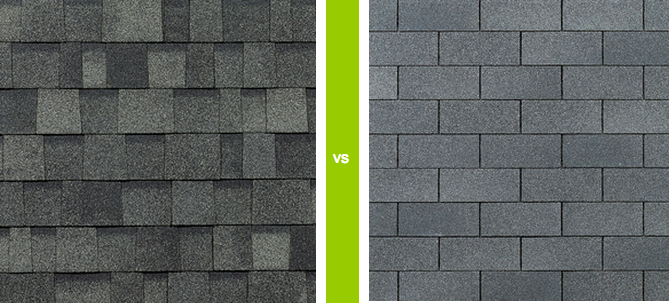
Three-tab shingles are single-layer with evenly spaced cutouts that give a flat, uniform look. Architectural shingles — also called dimensional shingles — are multi-layered, which creates a thicker, textured profile that mimics wood shake or slate.
The difference isn't only cosmetic. Northwest Roof Maintenance notes that architectural shingles generally offer better wind resistance and a longer expected service life than three-tab under similar conditions. That comes partly from the extra mass and partly from wider nailing zones.
Atlas Roofing introduced a larger format called the HP42" in June 2025 — a 42-inch-wide shingle with an enhanced nailing area, a zero-waste offset pattern, and a 130 mph wind warranty. Atlas says the format also speeds installation. It's one example of how shingle engineering keeps moving.
How to choose the right shingle for your house
Start with your roof's pitch. IRC Section R905.2 sets minimum slope requirements for asphalt shingles, and going below that threshold means water can back up under the laps.
Next, think about your climate. High-wind zones favor architectural shingles with six nails per shingle rather than the four used in standard conditions. Hail-prone areas now have clearer guidance: IBHS updated its Hail Impact-Resistant Shingle Ratings in November 2025, requiring an "Excellent" or "Good" rating for new installations to qualify for the FORTIFIED hail supplement. The IBHS FORTIFIED program also limits asphalt shingle roof eligibility for redesignation based on time from installation — a factor worth discussing with your contractor if long-term designation matters to you.
Ventilation matters more than most homeowners realize. Code ratios of 1:150 or 1:300 net free area exist because heat trapped in an under-ventilated attic bakes shingles from below, causing cracking and granule loss. Poor ventilation can also void manufacturer warranties.
Installation: what the process looks like and where it goes wrong
A proper installation follows a fixed sequence: inspect and prepare the deck, install drip edge, lay underlayment, apply ice and water shield where required, set starter strips, then run shingles up in offset courses. The NRCA and ARMA released updated Quality Control Guidelines for asphalt shingle systems in September 2025 covering on-site evaluation of substrates, underlayment, fasteners, shingles, and flashings.
Nailing placement is one of the most common failure points. Manufacturers mark a nailing zone on each shingle; nails outside that zone reduce wind resistance and can void the warranty. Architectural shingles typically require six nails per shingle in standard conditions.
Other frequent mistakes include skipping the starter strip, inconsistent offsets that create water channels, improper flashing at valleys and penetrations, and working in cold weather when sealant strips won't activate. Any of these can produce leaks or premature failure that looks like a shingle problem but is really an installation problem.
Routine care and maintenance
Twice-yearly inspections — spring and fall — catch most problems before they become expensive. Look for missing, cracked, curled, or loose shingles. Check flashing at chimneys, vents, and valleys. Clear debris from the roof surface and gutters; debris holds moisture and accelerates granule loss.
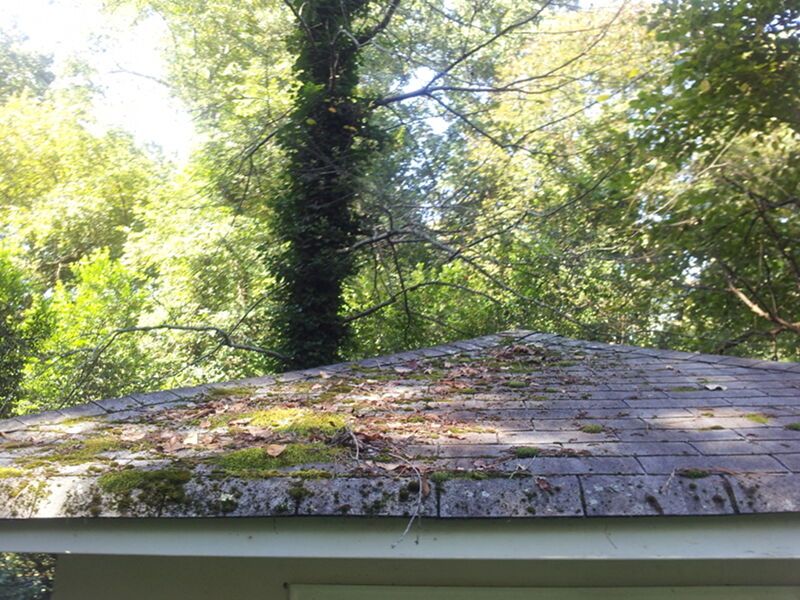
Algae and moss are common in humid or shaded areas. Neither should be pressure-washed off — that strips granules and shortens shingle life. Low-pressure chemical treatment is the right approach, and zinc or copper strips along the ridge can slow regrowth.
Keep an eye on attic ventilation year-round. Blocked soffit vents or a failed ridge vent changes the thermal dynamics under the deck and stresses the shingles above. Good gutter maintenance is part of roof care too — overflowing gutters push water back under the drip edge.
When to call a roofing professional
Any work that puts you on a sloped roof or a tall ladder carries serious fall risk. Falls are a major cause of injury and death in home improvement work. Full-body harnesses, anchors, and lifelines are required fall protection — not something most homeowners have or are trained to use. Visual inspections from the ground or through attic access are reasonable; walking the roof is a job for someone equipped for it.
Call a pro when you see water stains on ceilings or in the attic after rain, when granule loss is heavy and widespread, when shingles are curling or missing after a storm, or when flashing has lifted or separated. A single damaged shingle can sometimes be replaced; widespread problems or anything involving the deck or underlayment is contractor territory.
Get written quotes from more than one contractor. Price varies with roof size, pitch, shingle grade, local labor rates, and what the deck looks like once old material comes off. A written quote is the only way to know actual cost.
Questions people ask
How do I know if my asphalt shingles are failing?
Look for curling edges, cracking, missing shingles, or heavy granule buildup in gutters. Interior water stains after rain are another sign. A ground-level visual check twice a year catches most early warning signs before damage spreads to the deck.
Can I put new shingles over old ones?
Some codes allow a second layer over existing shingles, but it limits your ability to inspect the deck and adds weight. IRC Section R905.2 governs this. A roofer can assess whether the deck condition and local code permit it, or whether a full tear-off is the right call.
What is the IBHS FORTIFIED program and does it affect shingle choice?
IBHS FORTIFIED is a voluntary designation for wind and hail resilience. Updated hail impact ratings effective November 2025 require shingles rated "Excellent" or "Good" on new installations to qualify for the hail supplement. The program also sets eligibility limits for redesignation based on installation date.
Why do asphalt shingles lose granules?
Granule loss is normal in small amounts early on and as shingles age. It accelerates with poor attic ventilation, physical damage from hail or foot traffic, or pressure washing. Heavy or sudden granule loss in gutters signals the shingles need professional evaluation.
How many nails does each shingle need?
Standard conditions call for four nails per three-tab shingle and six per architectural shingle. High-wind zones may require more. Nails must land in the manufacturer's designated nailing zone — outside that zone, wind resistance drops and the warranty can be voided.
Do recycled-content asphalt shingles perform the same as standard ones?
ASTM revised D3462 and D3018 in December 2025 to allow recycled and recovered materials in shingles, provided every performance specification is still met. A shingle carrying that standard has passed the same tests regardless of what's in the mat.
Read: Architectural Shingles vs 3 tab Shingles
Roofers near you
Papalocal lists 57,657 roofers. Search them by town.
Related guides
All shingles guides
Your business? Claim it free